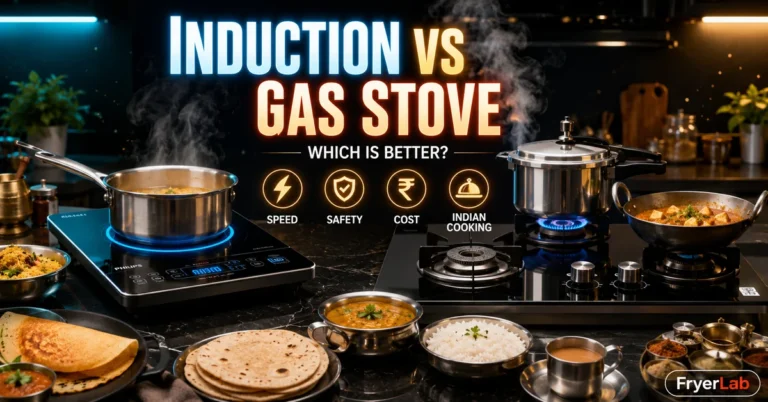

Induction Cooktop vs Gas Stove
Choosing between an Induction Cooktop vs Gas Stove is one of the most common questions for modern Indian kitchens. For many years, the traditional gas stove has been the first choice in Indian homes because it is familiar, easy to use, and works with almost every type of cookware. But in the last few years, the Induction Cooktop and induction cooker have become very popular because they are fast, safe, compact, and energy efficient.
Today, many families are confused. Should they continue with a regular gas stove, or should they shift to an Induction Cooktop? Is an induction cooker good for Indian cooking? Can it make roti, tea, dal, rice, sabzi, dosa, poha, upma, and curry properly? Is the electricity bill higher than gas cost? Which one is safer? Which one is better for daily use?
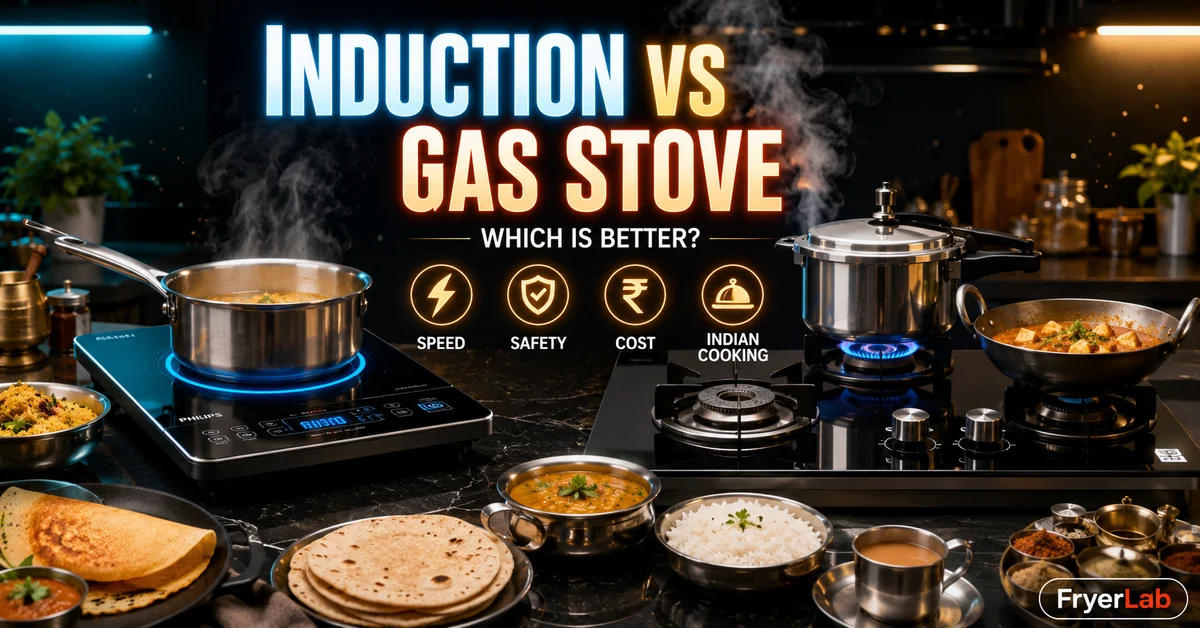
This detailed guide on Induction Cooktop vs Gas Stove will answer everything in simple language. We will compare cooking speed, safety, running cost, taste, cookware compatibility, cleaning, maintenance, portability, and suitability for Indian families.
By the end of this article, you will clearly understand whether an Induction Cooktop, traditional gas stove, or a combination of both is the best choice for your home.
What Is an Induction Cooktop?
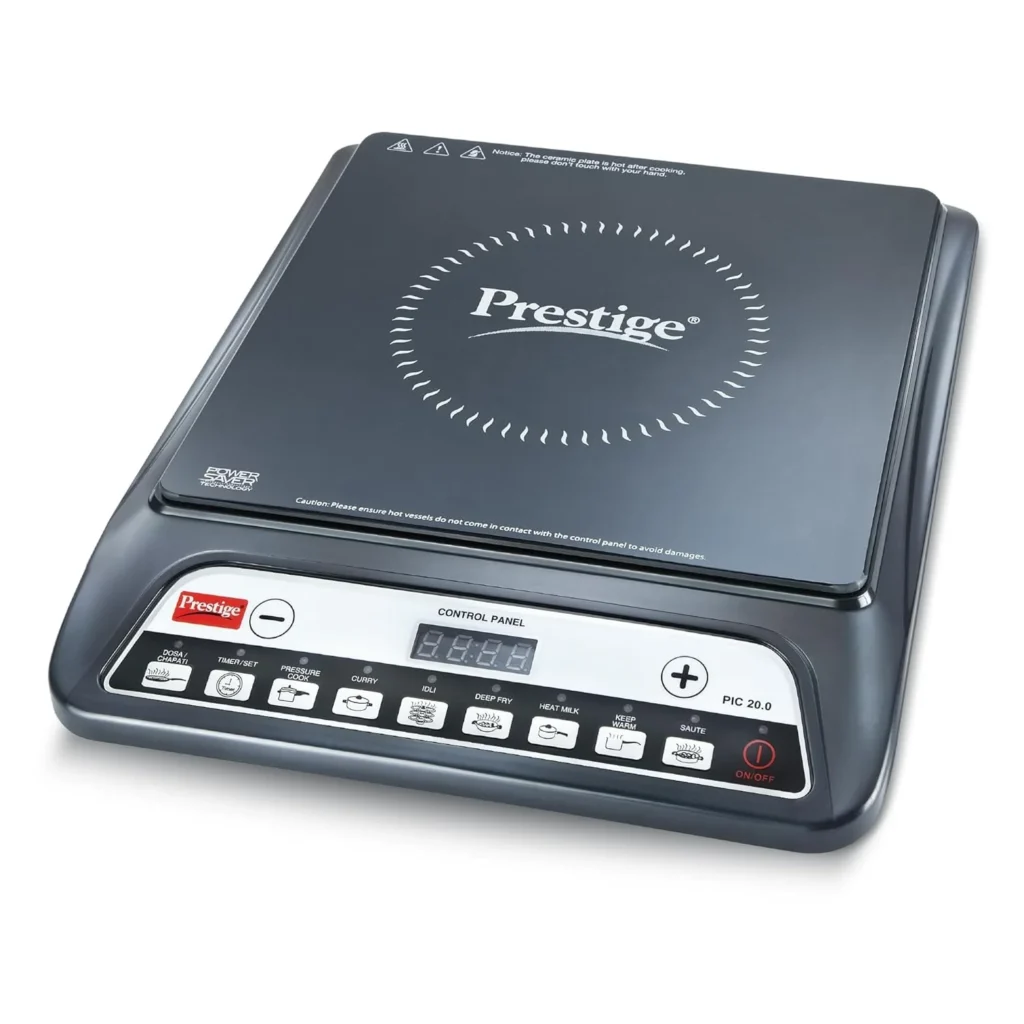
An Induction Cooktop is a modern electric cooking appliance that uses electromagnetic heating technology. Unlike a normal electric heater or coil stove, an Induction Cooktop does not directly heat the surface first. Instead, it creates a magnetic field that directly heats the base of compatible cookware.
This means heat is generated inside the vessel itself, not from an open flame. Because of this, an induction cooker is usually faster and more energy efficient than many traditional cooking methods.
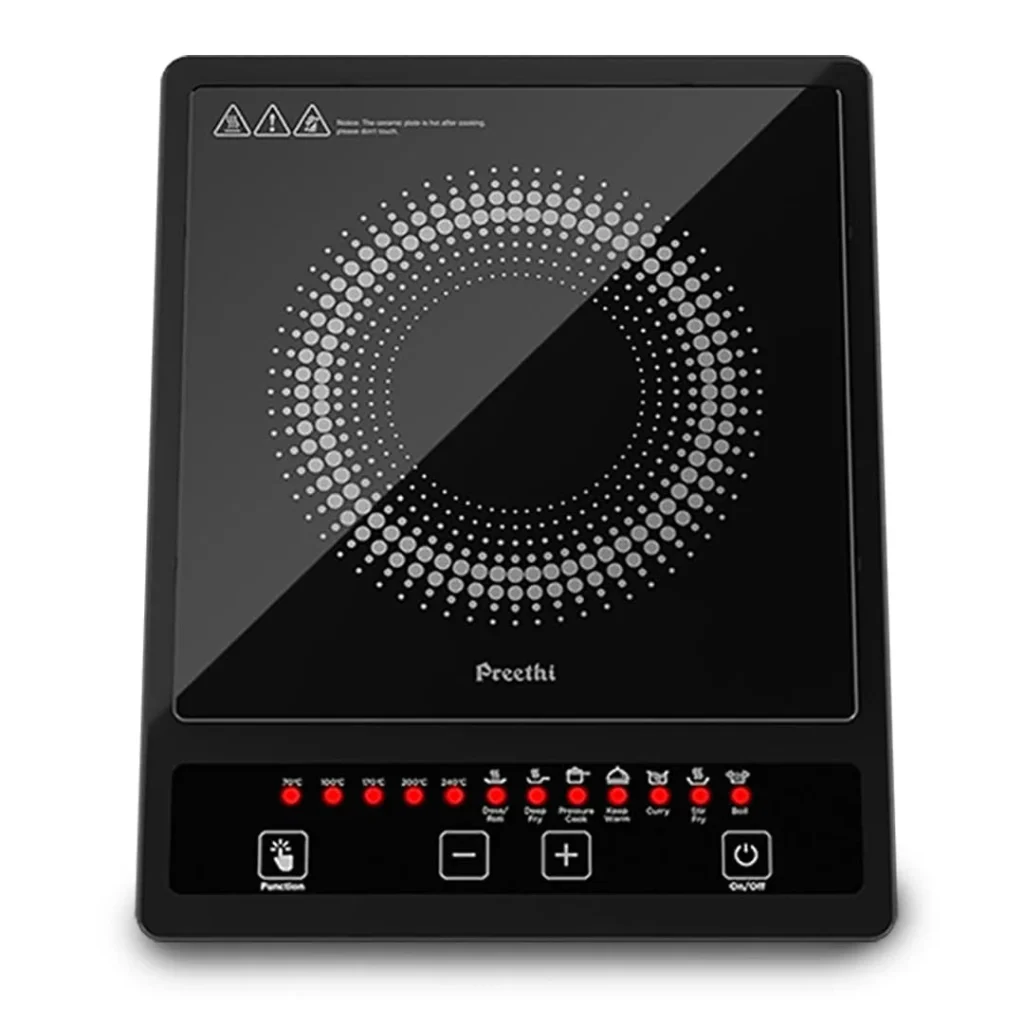
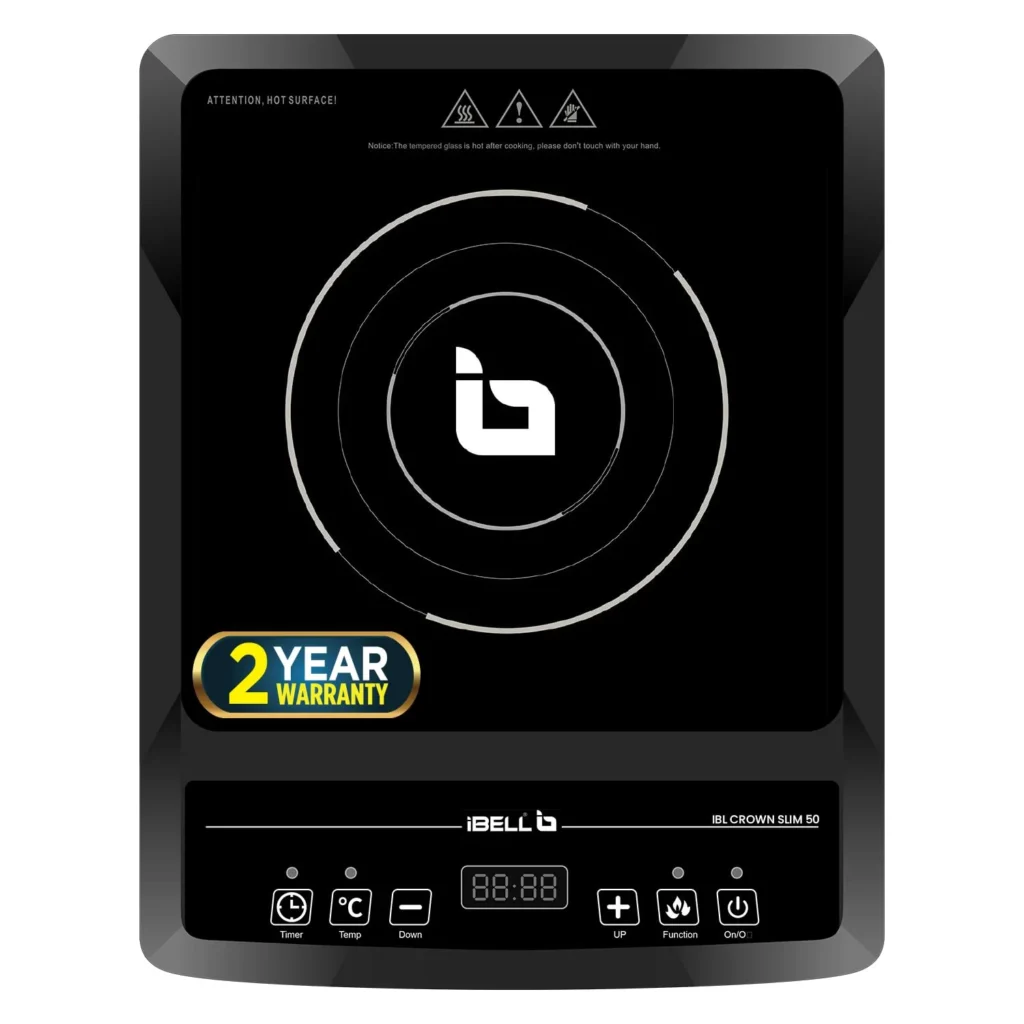
A typical Induction Cooktop has:
- A flat glass or ceramic top
- Touch buttons or push buttons
- Preset cooking menus
- Timer function
- Temperature or power control
- Auto shut-off safety feature
- Overheat protection
- LED display
In Indian homes, people use an induction cooker for making tea, boiling milk, cooking rice, preparing dal, heating curry, frying snacks, making poha, upma, noodles, soup, and many daily food items. However, the cookware must be induction-compatible.
What Is a Gas Stove?
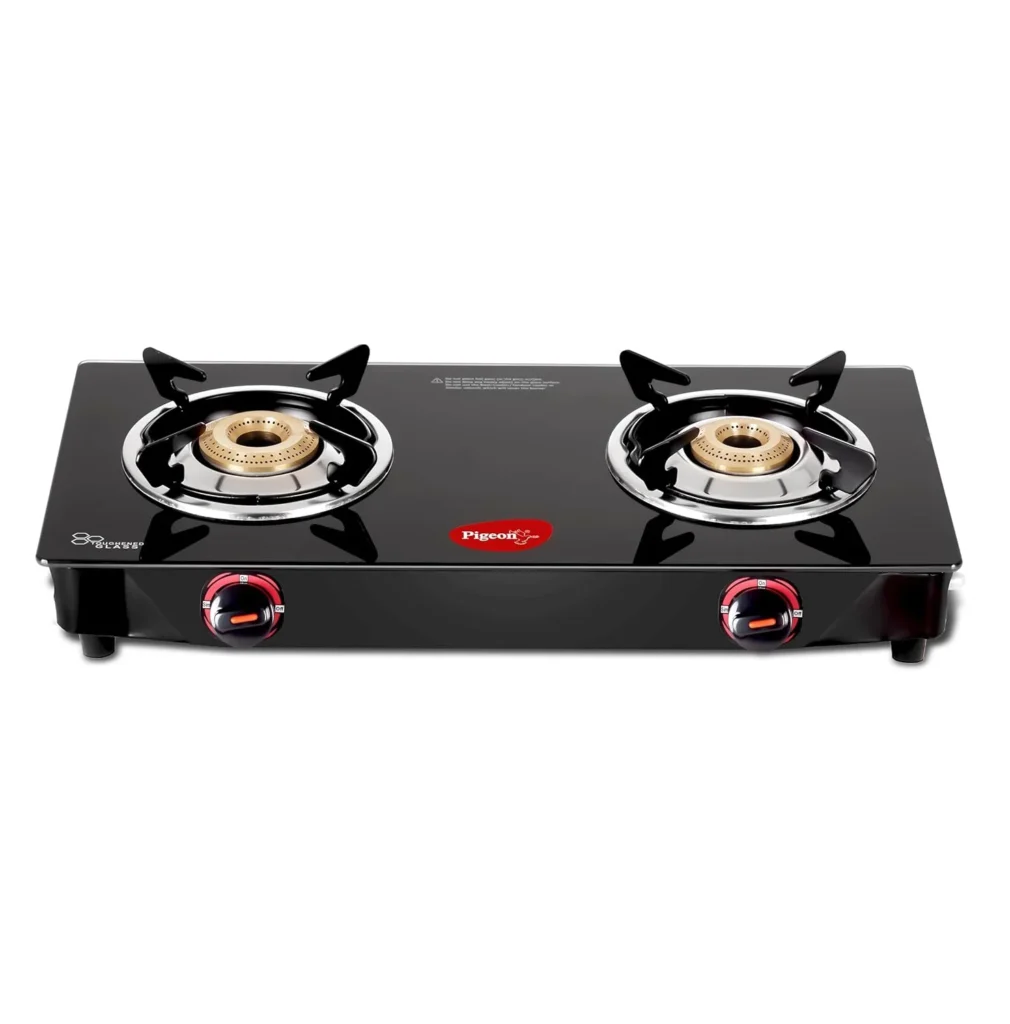
A gas stove is a traditional cooking appliance that uses LPG, PNG, or natural gas as fuel. It creates an open flame through burners, and the heat from the flame cooks the food.
The gas stove has been used in Indian kitchens for decades. It is very familiar and works with almost every type of cookware, including aluminium, stainless steel, iron, clay pots, brass vessels, kadai, pressure cooker, tawa, and milk pan.
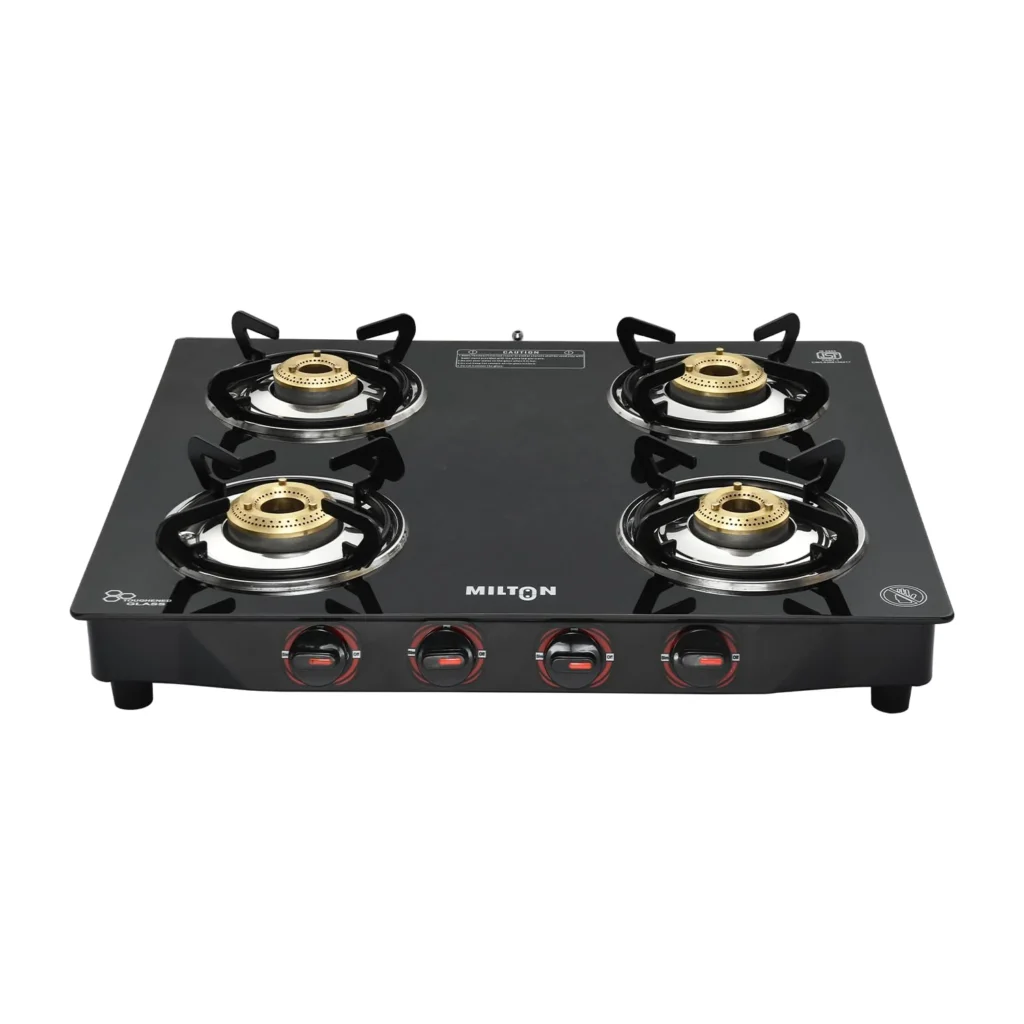
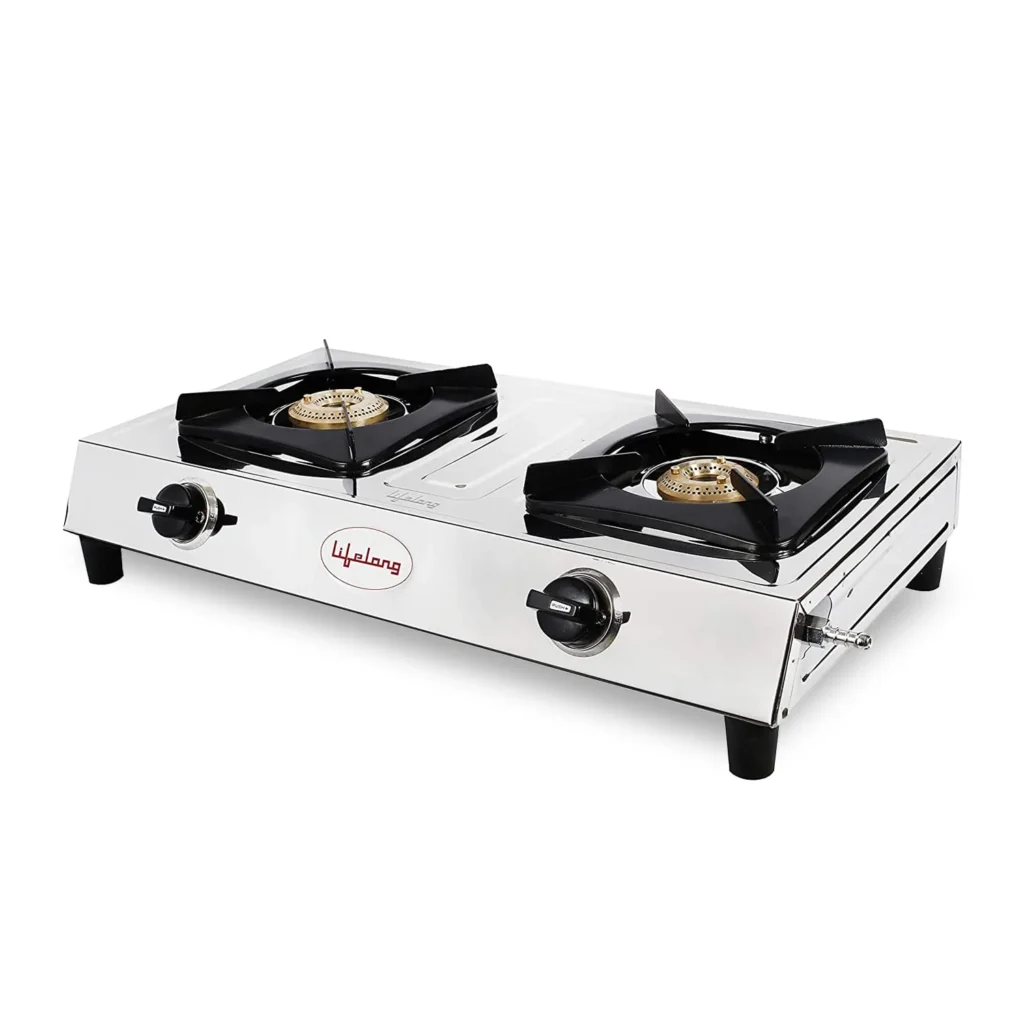
A common Indian gas stove may have:
- 1 burner
- 2 burners
- 3 burners
- 4 burners
- Manual ignition
- Auto ignition
- Stainless steel body
- Toughened glass top
- Brass burners
- Cast iron pan supports
A gas stove is widely used for roti, chapati, phulka, tadka, deep frying, slow cooking, pressure cooking, tea, milk boiling, and all types of Indian meals.
Basic Difference
The main difference in Induction Cooktop vs Gas Stove is the heating method.
An Induction Cooktop uses electricity and magnetic heating. A gas stove uses LPG or PNG gas and open flame. An induction cooker directly heats the vessel base, while a gas stove heats the vessel through flame.
This difference changes many things, including cooking speed, safety, cost, control, cleaning, and cookware compatibility.
The Induction Cooktop is more modern, compact, and safer because there is no open flame. The gas stove is more flexible and suitable for all types of traditional Indian cooking because it accepts almost every cookware type.
Cooking Speed
Cooking speed is one of the biggest reasons people compare Induction Cooktop vs Gas Stove.
An Induction Cooktop is generally faster for boiling water, making tea, boiling milk, cooking rice, and heating curry. Because the heat is directly transferred to the vessel base, less heat is wasted. This makes an induction cooker very useful for quick cooking.
For example, if you want to boil water for tea, an Induction Cooktop can often do it faster than a regular gas stove, especially if you use a flat-bottom induction-compatible vessel.
A gas stove is also good for cooking speed, but some heat escapes around the vessel because of the open flame. In a kitchen with airflow or fan, more heat can be wasted. However, for some cooking methods like roti, tadka, deep frying, and flame roasting, a gas stove still feels more natural and flexible.
Winner in Cooking Speed
For boiling, heating, and simple cooking, the Induction Cooktop is usually faster.
For traditional cooking, flame cooking, and roasting, the gas stove is better.
Energy Efficiency
Energy efficiency is very important when comparing Induction Cooktop vs Gas Stove.
An Induction Cooktop is highly energy efficient because heat is created directly inside the cookware. Less energy is lost to the surrounding air. The cooking surface also remains comparatively cooler than a gas stove flame area.
A gas stove loses more heat because the flame heats not only the vessel but also the surrounding air. When the flame is too high or the vessel is small, even more heat is wasted.
This is why an induction cooker is often considered more efficient for daily tasks like boiling water, cooking rice, making dal, reheating food, and preparing tea.
But energy efficiency alone does not decide the running cost. You also need to compare electricity rate and LPG or PNG cost in your city.
Running Cost
Running cost is one of the most important points in Induction Cooktop vs Gas Stove.
An Induction Cooktop runs on electricity. A gas stove runs on LPG or PNG gas. The actual cost depends on:
- Electricity rate per unit in your area
- LPG cylinder price
- PNG gas rate
- Cooking time per day
- Family size
- Type of food cooked
- Wattage of induction cooker
- Burner efficiency of gas stove
A normal Induction Cooktop usually consumes around 1200W to 2200W depending on the model and power setting. But it does not always run at full wattage continuously. When you use lower temperature or preset mode, electricity consumption changes.
A gas stove uses gas based on flame level and cooking duration. For Indian homes where cooking happens multiple times a day, LPG cost can be significant.
Which Is Cheaper?
For light cooking, boiling, reheating, tea, milk, dal, rice, and small meals, an Induction Cooktop can be cost-effective. For heavy cooking, large family meals, long-duration cooking, and multiple dishes at the same time, a gas stove may still be more practical.
For many Indian homes, the best solution is not choosing only one. The best option is using both: an Induction Cooktop for quick cooking and a gas stove for heavy Indian cooking.
Safety
Safety is a major reason why many people prefer an Induction Cooktop.
A gas stove uses open flame. This means there is always some risk of gas leakage, accidental fire, cylinder handling issues, and flame-related burns. If the burner is left on by mistake, it can be dangerous.
An Induction Cooktop does not use open flame. It also comes with safety features like:
- Auto shut-off
- Overheat protection
- Child lock in some models
- Pan detection
- Timer function
- Voltage protection in some models
If there is no compatible vessel on the Induction Cooktop, many models automatically stop heating. This makes the induction cooker safer for small kitchens, hostels, rented rooms, offices, and homes with elderly people.
However, safety also depends on proper use. An Induction Cooktop should be connected to a good-quality socket. Avoid loose plugs, damaged wires, overloaded extension boards, and wet surfaces.
Winner in Safety
In Induction Cooktop vs Gas Stove, the Induction Cooktop is safer because it has no open flame and includes automatic safety features.
Induction Cooktop vs Gas Stove: Taste of Food
Many Indian users ask: does food taste different on an Induction Cooktop vs Gas Stove?
For most dishes like dal, rice, tea, curry, sabzi, noodles, soup, boiling milk, and reheating food, the taste difference is very small or almost zero if cooked properly.
But for some traditional Indian cooking styles, the gas stove gives better control and natural flame effect. For example:
- Phulka
- Roti directly on flame
- Baingan bharta roasting
- Papad roasting
- Tadka on open flame
- Slow cooking in traditional vessels
- Deep frying in kadai
A gas stove gives visual flame control. Many Indian cooks are comfortable adjusting the flame by looking at it. An Induction Cooktop gives digital power control, which is accurate but may feel different at first.
An induction cooker can make tasty food, but you need to understand temperature settings. For example, if the power is too high, milk may overflow quickly. If you use very high power for frying, the oil may heat too fast. Once you learn the settings, cooking becomes easy.
Winner in Taste
For regular cooking, both are good.
For traditional flame-based Indian cooking, the gas stove has an advantage.
Induction Cooktop vs Gas Stove: Cookware Compatibility
This is one of the biggest limitations of an Induction Cooktop.
A gas stove works with almost all cookware. You can use aluminium, stainless steel, iron, brass, copper, clay pot, flat vessel, round vessel, kadai, tawa, pressure cooker, and many traditional Indian utensils.
An Induction Cooktop only works with induction-compatible cookware. The vessel must have a magnetic flat base. If the cookware is not compatible, the induction cooker will not heat it.
How to Check Induction-Compatible Cookware
Use a simple magnet test. If a magnet sticks strongly to the bottom of the vessel, it may work on an Induction Cooktop. Also, the base should be flat.
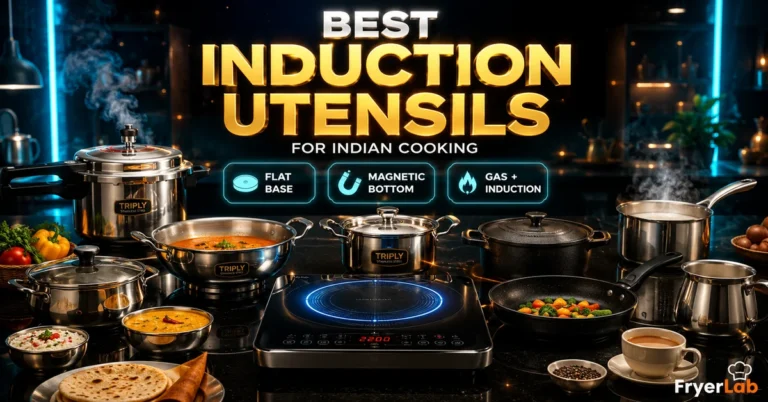
Cookware suitable for an Induction Cooktop includes:
- Induction-compatible stainless steel
- Cast iron cookware
- Iron tawa
- Induction base pressure cooker
- Induction base kadai
- Induction base saucepan
- Some non-stick pans with induction base
Cookware not suitable for most induction cooktops:
- Normal aluminium vessels
- Copper vessels
- Brass vessels
- Clay pots
- Round-bottom kadai
- Non-flat utensils
- Glass cookware
Winner in Cookware Compatibility
The gas stove is clearly better because it supports almost every type of cookware.
Cleaning and Maintenance
Cleaning is another important part of Induction Cooktop vs Gas Stove.
An Induction Cooktop is very easy to clean because it has a flat glass top. After cooking, you can wipe it with a soft cloth. If milk or curry spills, cleaning is simple compared to a gas stove.
A gas stove has burners, pan supports, knobs, drip trays, and sometimes toughened glass edges. Oil, masala, milk, tea, and food particles can get stuck around burners. Cleaning takes more time.
A gas stove also needs burner cleaning from time to time. If the burner holes get blocked, the flame becomes uneven or yellow. Auto ignition models may also need careful cleaning.
An Induction Cooktop has fewer external parts, but you must protect the glass top from heavy impact. Do not drop a pressure cooker or heavy kadai on it. Also avoid dragging rough cookware on the surface.
Winner in Cleaning
The Induction Cooktop is easier to clean and maintain for daily use.
Temperature Control
Temperature control is different in both appliances.
A gas stove gives instant visual flame control. You can increase or decrease the flame manually. Indian cooks are used to this method. It is very helpful for tadka, frying, roasting, and slow cooking.
An Induction Cooktop gives digital control. You can select wattage or temperature level. Some models come with preset options like:
- Boil
- Milk
- Curry
- Fry
- Pressure cook
- Roti
- Dosa
- Keep warm
The digital control of an induction cooker is accurate, but it may not feel natural for people who have used a gas stove for many years.
For boiling and reheating, induction control is excellent. For delicate cooking like slow tadka or flame roasting, gas feels better.
Winner in Control
For digital precision, Induction Cooktop is good.
For traditional Indian cooking control, gas stove is better.
Portability
Portability is one of the biggest advantages of an Induction Cooktop.
An induction cooker is compact, lightweight, and easy to move. You can use it in:
- Small kitchens
- Hostel rooms
- Rented rooms
- Office pantry
- PG accommodation
- Temporary cooking setups
- Travel homes
- Backup kitchen setup
A gas stove needs a gas cylinder or pipeline connection. It is not as portable. You also need space for cylinder storage if using LPG.
For bachelors, students, small families, and people living in rented homes, an Induction Cooktop is very convenient.
Winner in Portability
The Induction Cooktop is more portable than a gas stove.
Space Requirement
An Induction Cooktop takes very little space. You can keep it on a small kitchen counter and store it after use. This is useful for small flats and compact kitchens.
A gas stove needs more fixed space. If you use LPG, you also need cylinder space. For a 3-burner or 4-burner gas stove, the counter space requirement is higher.
In small urban kitchens, an Induction Cooktop can save space. But if you cook many dishes at once, a 2-burner or 3-burner gas stove is more practical.
Cooking for Large Family
For large Indian families, a gas stove is usually more practical.
Most families cook multiple items at the same time: dal, rice, sabzi, roti, tea, and sometimes breakfast or tiffin items. A 2-burner, 3-burner, or 4-burner gas stove allows multitasking.
A single Induction Cooktop can cook only one item at a time. You can buy multiple induction units, but that needs proper electrical load capacity and counter space.
For a small family, student, bachelor, or couple, an induction cooker can manage many daily needs. For a large family, a gas stove is more comfortable.
Winner for Large Family
The gas stove is better for large families and heavy cooking.
Induction Cooktop vs Gas Stove: Indian Cooking Suitability
Indian cooking is not only boiling and frying. It includes:
- Tadka
- Pressure cooking
- Deep frying
- Slow cooking
- Roti and phulka
- Dosa
- Idli
- Tea
- Milk boiling
- Dal
- Rice
- Curry
- Sabzi
- Chilla
- Poha
- Upma
- Khichdi
An Induction Cooktop can handle many Indian dishes very well. It is excellent for tea, milk, rice, dal, curry, boiling vegetables, soup, noodles, and reheating food.
But a gas stove is better for flame-based cooking. Roti puffing, direct roasting, and traditional kadai cooking are easier on gas.
For dosa, an Induction Cooktop can work if you use a flat induction-compatible tawa. But temperature control may take practice. For roti, you can cook on induction tawa, but direct flame phulka is not possible.
Best Practical Answer
For Indian cooking, the best setup is:
Use a gas stove for traditional heavy cooking and use an Induction Cooktop for quick daily tasks.
This combination gives speed, safety, flexibility, and convenience.
Advantages of Induction Cooktop
The Induction Cooktop has many benefits for modern homes.
1. Faster Cooking
An Induction Cooktop heats the vessel directly, so boiling and heating are faster.
2. Safer Cooking
There is no open flame, making the induction cooker safer than a gas stove in many situations.
3. Easy Cleaning
The flat glass surface is easy to clean with a cloth.
4. Compact Size
An Induction Cooktop takes less space and is easy to store.
5. Good for Small Families
For bachelors, students, couples, and small families, an induction cooker is very useful.
6. Energy Efficient
Less heat is wasted compared to open flame cooking.
7. Useful Backup Option
If your LPG cylinder becomes empty, an Induction Cooktop can work as a backup cooking option.
8. Modern Features
Timer, preset menu, auto shut-off, and temperature control make cooking convenient.
Disadvantages of Induction Cooktop
An Induction Cooktop also has some limitations.
1. Needs Compatible Cookware
Normal aluminium or round-bottom vessels may not work.
2. Depends on Electricity
If there is a power cut, the induction cooker will not work.
3. Not Ideal for Direct Flame Cooking
You cannot roast papad, baingan, or phulka directly on flame.
4. Single Cooking Zone
Most home induction cooktops allow only one vessel at a time.
5. Glass Surface Needs Care
The top surface can break if heavy cookware falls on it.
6. Learning Curve
People used to a gas stove may need some time to adjust to power levels.
Advantages of Gas Stove
A gas stove is still the most trusted appliance in Indian kitchens.
1. Works with All Cookware
A gas stove supports almost all utensils.
2. Best for Indian Cooking
Roti, tadka, frying, roasting, and slow cooking are easy.
3. No Electricity Needed
A gas stove works even during power cuts.
4. Multiple Burners
You can cook multiple dishes at the same time.
5. Familiar Cooking Style
Most Indian families already know how to use a gas stove comfortably.
6. Better for Heavy Cooking
Large families and regular home cooks may prefer gas.
7. Flame Control
You can visually adjust the flame according to cooking needs.
Disadvantages of Gas Stove
A gas stove also has some drawbacks.
1. Open Flame Risk
Fire risk is higher compared to an Induction Cooktop.
2. Gas Leakage Risk
LPG and PNG need careful handling.
3. More Heat in Kitchen
A gas stove increases kitchen temperature.
4. Cleaning Takes More Time
Burners, stands, and knobs need regular cleaning.
5. Less Energy Efficient
Some heat is wasted around the vessel.
6. Cylinder Dependency
For LPG users, cylinder booking and replacement can be inconvenient.
Which Is Better for Tea and Milk?
For tea and milk, an Induction Cooktop is very fast. It heats quickly and saves time. However, milk can overflow quickly if you use high power. Use medium power and a timer to control boiling.
A gas stove gives better visual control, and many people are used to making tea on gas. But for speed and convenience, an induction cooker is excellent.
Best choice: Induction Cooktop for quick tea and milk boiling.
Which Is Better for Roti?
For roti and phulka, a gas stove is better. You can cook roti on a tawa and puff it directly on flame. This is not possible on an Induction Cooktop because there is no flame.
You can make roti on an induction-compatible tawa, but it will not give the same direct flame puffing experience.
Best choice: Gas stove for roti and phulka.
Which Is Better for Rice and Dal?
For rice and dal, both work well. An Induction Cooktop can cook rice and dal quickly with an induction-compatible pressure cooker or pot. The timer feature is useful.
A gas stove is also excellent for pressure cooking and gives familiar control.
Best choice: Both are good, but Induction Cooktop is faster for small quantities.
Which Is Better for Deep Frying?
Deep frying can be done on both, but a gas stove is usually more comfortable for Indian frying. Kadai size, flame control, and stirring flexibility are better on gas.
An Induction Cooktop can deep fry if you use a flat induction-compatible kadai. However, round-bottom kadai may not work. Also, the induction surface size may limit large kadai use.
Best choice: Gas stove for deep frying and heavy frying.
Which Is Better for Dosa?
Dosa can be made on an Induction Cooktop using a flat induction-compatible dosa tawa. It may take some practice to manage temperature.
A gas stove is easier for dosa because heat spread and flame control feel more natural.
Best choice: Gas stove for traditional dosa, but Induction Cooktop is also good with the right tawa.
Which Is Better for Hostel or Rented Room?
For a hostel, rented room, PG, or small space, an Induction Cooktop is usually better. It is compact, safe, easy to clean, and does not require a gas cylinder.
An induction cooker is ideal for students and bachelors who make tea, noodles, rice, dal, eggs, soup, and simple meals.
Best choice: Induction Cooktop.
Which Is Better During Power Cuts?
During power cuts, a gas stove is better because it does not need electricity. An Induction Cooktop stops working when electricity is not available.
If your area has frequent power cuts, keeping a gas stove is important.
Best choice: Gas stove.
Which Is Better for Senior Citizens?
For elderly people, safety is very important. An Induction Cooktop can be safer because there is no open flame. Auto shut-off and timer functions are helpful.
However, some senior citizens may find touch controls confusing. A gas stove is familiar, but it has flame and gas leakage risks.
Best choice: Induction Cooktop for safety, but choose a simple model with easy buttons.
Which Is Better for Small Kitchen?
For small kitchens, an Induction Cooktop is better because it saves space and creates less heat. It is also easier to clean.
A gas stove needs more counter space and cylinder space if using LPG.
Best choice: Induction Cooktop for compact kitchens.
Which Is Better for Daily Indian Family Cooking?
For daily Indian family cooking, the answer depends on your family size.
For bachelors, couples, and small families, an Induction Cooktop can handle many daily cooking tasks. For medium and large families, a gas stove is still more practical because it supports multiple burners and all cookware.
The best Indian kitchen setup is to keep both. Use an Induction Cooktop for fast cooking and a gas stove for roti, frying, roasting, and heavy cooking.
Buying Guide: How to Choose an Induction Cooktop
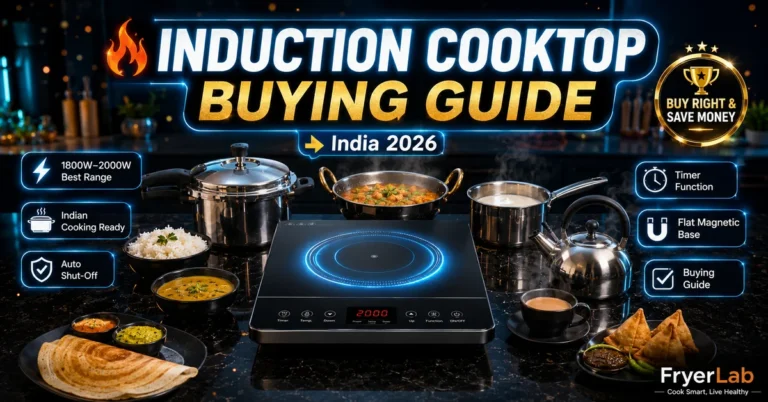
Before buying an Induction Cooktop, check these points:
1. Wattage
Choose 1600W to 2000W for normal Indian cooking. Higher wattage means faster cooking but may use more power at full setting.
2. Preset Menus
Look for Indian preset menus like milk, tea, curry, pressure cook, dosa, roti, and fry.
3. Safety Features
Auto shut-off, overheat protection, and pan detection are important.
4. Control Type
Touch control looks modern, but push-button control may be easier for some users.
5. Build Quality
Choose a strong glass top and trusted brand.
6. Warranty
Check warranty and service availability in your city.
7. Cookware Compatibility
Make sure you already have induction-compatible cookware or budget for new utensils.
Buying Guide: How to Choose a Gas Stove
Before buying a gas stove, check these points:
1. Number of Burners
For small families, 2 burners are enough. For medium and large families, 3 or 4 burners are better.
2. Burner Material
Brass burners are durable and good for Indian cooking.
3. Body Type
Stainless steel is strong and easy to maintain. Glass-top models look premium but need careful handling.
4. Manual or Auto Ignition
Manual ignition is simple and durable. Auto ignition is convenient but may need maintenance.
5. Pan Support
Strong pan supports are important for heavy pressure cookers and kadai.
6. ISI Mark
Always choose an ISI-certified gas stove for safety.
7. Easy Cleaning
Choose a design where burners and trays are easy to clean.
Induction Cooktop vs Gas Stove: Quick Comparison
| Feature | Induction Cooktop | Gas Stove |
|---|---|---|
| Heating Method | Electromagnetic heating | Open flame |
| Fuel Type | Electricity | LPG/PNG |
| Cooking Speed | Very fast for boiling/heating | Good but heat loss is higher |
| Safety | Safer, no flame | Flame and gas leakage risk |
| Cookware | Needs induction base | Works with almost all cookware |
| Cleaning | Very easy | Takes more time |
| Roti/Phulka | Not ideal for direct flame | Best |
| Deep Frying | Possible with flat kadai | Better |
| Power Cut Use | Cannot work | Works |
| Portability | Very portable | Less portable |
| Large Family Cooking | Limited | Better |
| Small Kitchen | Excellent | Needs more space |
| Maintenance | Low | Burner cleaning needed |
Who Should Buy an Induction Cooktop?
You should buy an Induction Cooktop if:
- You live in a hostel, PG, or rented room
- You have a small kitchen
- You want fast cooking
- You want a safe cooking option
- You need a backup when LPG is empty
- You mostly cook tea, milk, rice, dal, curry, noodles, and simple meals
- You want easy cleaning
- You already have induction-compatible cookware
- You want a modern kitchen appliance
An induction cooker is a smart choice for people who want convenience, speed, and safety.
Who Should Buy a Gas Stove?
You should buy a gas stove if:
- You cook full Indian meals daily
- You make roti, phulka, tadka, and fried snacks regularly
- You have a medium or large family
- You need multiple burners
- You use different types of cookware
- Your area has frequent power cuts
- You prefer traditional flame cooking
- You want complete flexibility
A gas stove is still the most practical choice for heavy Indian cooking.
Best Practical Setup for Indian Homes
For most Indian families, the best answer to Induction Cooktop vs Gas Stove is not choosing only one. The best setup is using both.
Use the gas stove for:
- Roti
- Phulka
- Tadka
- Deep frying
- Heavy cooking
- Roasting
- Multiple dishes
Use the Induction Cooktop for:
- Tea
- Milk
- Rice
- Dal
- Reheating food
- Boiling water
- Quick snacks
- Backup cooking
- Small meals
This combination gives the best balance of speed, safety, convenience, and traditional cooking comfort.
Common Mistakes While Using Induction Cooktop
Many people buy an Induction Cooktop but do not use it properly. Avoid these mistakes:
1. Using Non-Compatible Cookware
If the vessel is not induction-compatible, the induction cooker will not work.
2. Using Round-Bottom Kadai
A flat base is required for proper heating.
3. Using Very High Power Always
High power can burn food or overflow milk. Use medium settings when needed.
4. Dragging Cookware
Dragging vessels can scratch the glass surface.
5. Using Weak Extension Board
An Induction Cooktop needs a good electrical connection. Avoid cheap extension boards.
6. Not Cleaning Spills Quickly
Clean spills after the surface cools down.
Common Mistakes While Using Gas Stove
Avoid these mistakes while using a gas stove:
1. Ignoring Gas Smell
If you smell gas, turn off the regulator and open windows. Do not switch on lights or use flame.
2. Using Oversized Flame
High flame wastes gas and can burn food.
3. Not Cleaning Burners
Blocked burner holes reduce efficiency.
4. Keeping Plastic Items Nearby
Keep plastic, cloth, and paper away from the flame.
5. Poor Cylinder Handling
Always keep LPG cylinder upright and check the pipe condition.
6. Using Damaged Gas Pipe
Replace cracked or old gas pipes immediately.
Environmental Impact: Induction Cooktop vs Gas Stove
An Induction Cooktop uses electricity. Its environmental impact depends on how electricity is generated in your region. If electricity comes from renewable sources, induction cooking can be cleaner.
A gas stove burns LPG or PNG, which directly produces emissions inside or around the kitchen. It also increases indoor heat.
From a kitchen comfort point of view, an Induction Cooktop produces less surrounding heat and keeps the kitchen cooler. This is useful in hot Indian climates.
Final Verdict: Induction Cooktop vs Gas Stove
So, which is better in Induction Cooktop vs Gas Stove?
The answer depends on your cooking style.
Choose an Induction Cooktop if you want fast, safe, compact, and easy cooking. It is excellent for boiling, reheating, tea, milk, rice, dal, and small meals. It is also great for students, bachelors, rented homes, and small kitchens.
Choose a gas stove if you cook traditional Indian food every day. It is better for roti, phulka, tadka, frying, roasting, large family cooking, and using different cookware.
For most Indian homes, the best choice is keeping both. A gas stove gives traditional cooking flexibility, while an Induction Cooktop gives speed and convenience. If your budget allows, use the gas stove as the main appliance and keep an induction cooker as a smart backup.
In simple words, the gas stove is best for complete Indian cooking, while the Induction Cooktop is best for fast, safe, and modern cooking support.
Induction Cooktop Buying Guide 2026:Save Money,Cook Faster
Best Utensils for Induction Cooktop: Complete Buying Guide for Indian Kitchens