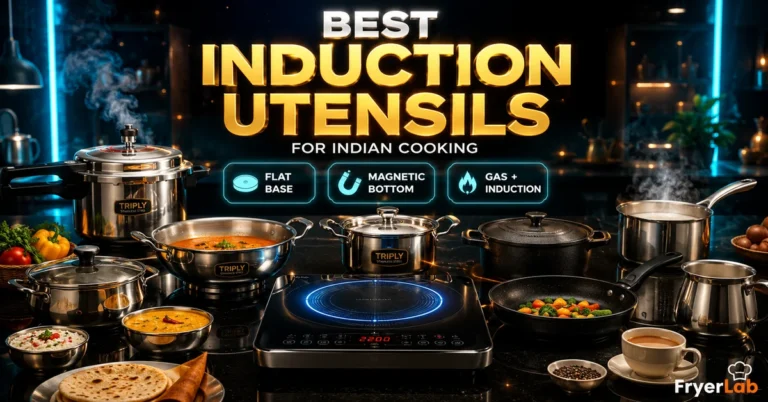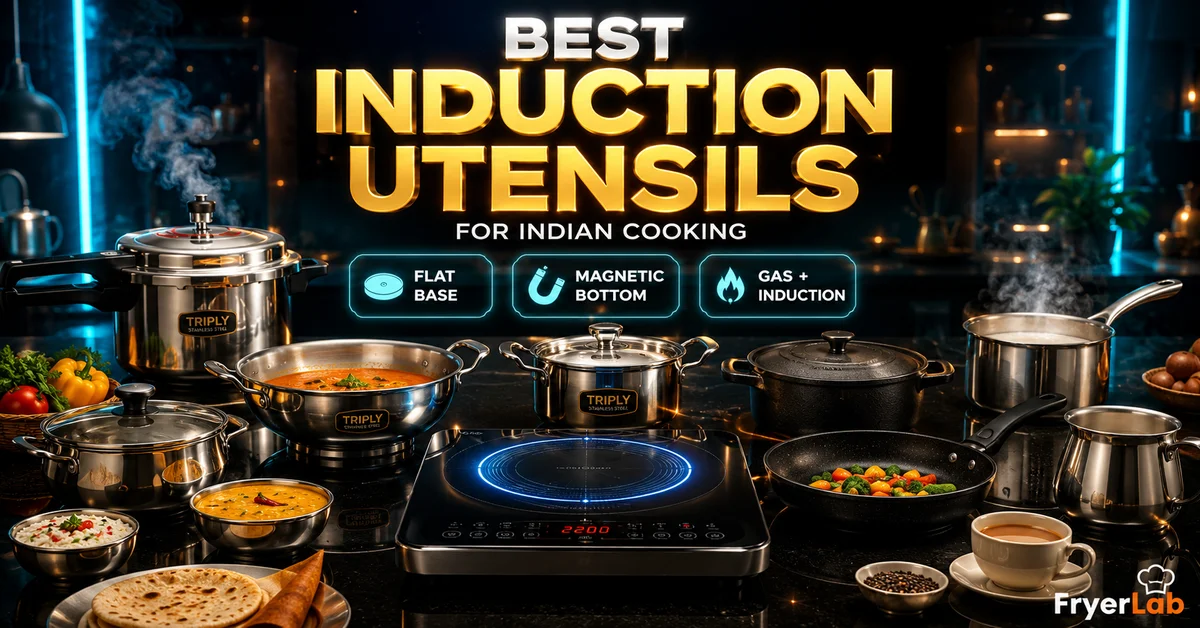

Best Utensils for Induction Cooktop: Complete Guide
Induction cooking is becoming very popular in Indian kitchens because it is fast, energy-efficient, safe, and easy to use. Many people are now shifting from a gas stove to an induction cooktop for daily cooking. But one common problem many users face is choosing the right utensils. Unlike a normal gas stove, an induction cooktop does not work with every type of cookware. You need special induction-compatible utensils that can work properly with magnetic heating technology.
If you are planning to buy an induction cooktop or already have one at home, choosing the Best Utensils for Induction Cooktop is very important. The wrong cookware may not heat at all, may heat unevenly, or may damage your induction cooktop surface. On the other hand, the right utensils can make cooking faster, safer, and more convenient.
In this detailed guide, we will discuss everything you need to know about induction cookware. You will learn how induction utensils work, which materials are best, which utensils are useful for Indian cooking, what size to choose, what mistakes to avoid, and how to maintain induction cookware for long life.
What Are Induction Cooktop Utensils?
Induction cooktop utensils are cookware items that are specially designed to work on induction cooktops. These utensils have a magnetic base that reacts with the electromagnetic field created by the induction cooker. When the cookware is placed on the induction surface, heat is generated directly inside the utensil base.
This is different from a gas stove. In gas cooking, flame heats the bottom of the utensil. But in induction cooking, the cooktop itself does not directly produce flame. Instead, it creates a magnetic field that heats the cookware. That is why only magnetic-base utensils can work on induction cooktops.
Common induction utensils include:
- Induction pressure cooker
- Induction kadai
- Induction frying pan
- Induction tawa
- Induction saucepan
- Induction milk pan
- Induction stock pot
- Induction tea pan
- Induction handi
- Induction grill pan
For Indian kitchens, these utensils are useful for making tea, dal, rice, sabzi, roti, dosa, poha, upma, curry, fried snacks, and many other daily recipes.
How to Check If a Utensil Is Induction Compatible
Before buying new cookware, you should know how to check whether your existing utensil can work on an induction cooktop. The easiest method is the magnet test.
Take a small fridge magnet and place it on the bottom of the utensil. If the magnet sticks strongly to the base, the utensil is induction compatible. If the magnet does not stick, it will not work properly on an induction cooktop.
You can also check the bottom of the cookware. Many induction utensils have an induction symbol printed on the base. This symbol usually looks like a coil or spring. If you see this symbol, the cookware is designed for induction cooking.
Another important point is the base should be flat. Even if the utensil has a magnetic bottom, a curved or uneven base may not sit properly on the induction glass surface. This can reduce heating performance and may cause error messages on the induction cooktop.
Best Materials for Induction Cooktop Utensils
Choosing the right material is the most important part when buying the Best Utensils for Induction Cooktop. Different materials have different benefits. Some are good for daily cooking, some are better for frying, and some are best for healthy cooking.
1. Stainless Steel Induction Utensils
Stainless steel is one of the most popular materials for induction cookware. It is strong, durable, rust-resistant, and suitable for everyday Indian cooking. Stainless steel induction utensils usually come with a magnetic stainless steel base or a multi-layer base.
Stainless steel cookware is excellent for cooking dal, rice, tea, milk, curry, soups, and boiling vegetables. It does not react with acidic foods like tomato, tamarind, or lemon. This makes it a safe and long-lasting option for Indian kitchens.
Benefits of Stainless Steel Induction Cookware
Stainless steel utensils are durable and can last for many years. They are easy to clean and do not absorb smell or colour from food. They also look premium and are suitable for both induction and gas stove use if the product is multi-stove compatible.
Limitations
Stainless steel is not naturally non-stick. Food may stick if you cook with very little oil or if the pan is not heated properly. For items like dosa, omelette, or shallow frying, a non-stick pan may be easier.
Best Use
Stainless steel induction cookware is best for tea, milk, dal, rice, boiling, curries, soups, and general cooking.
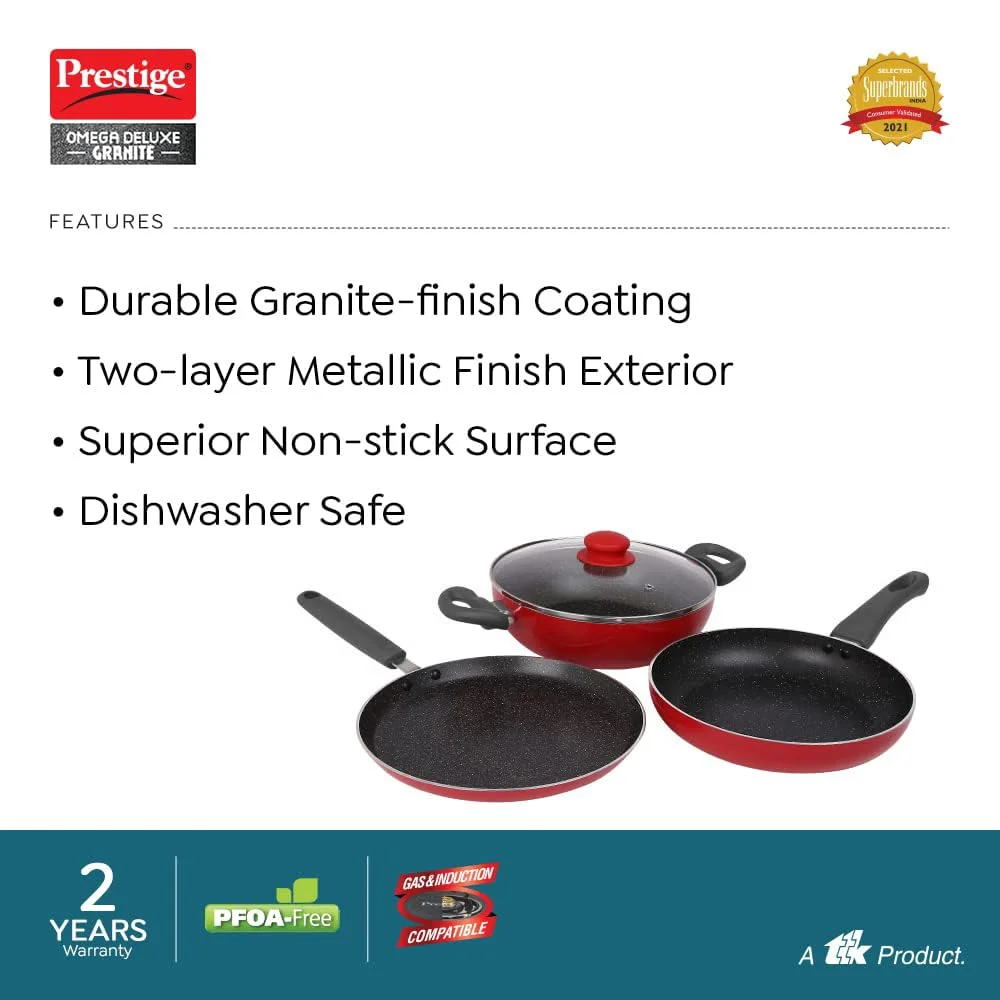
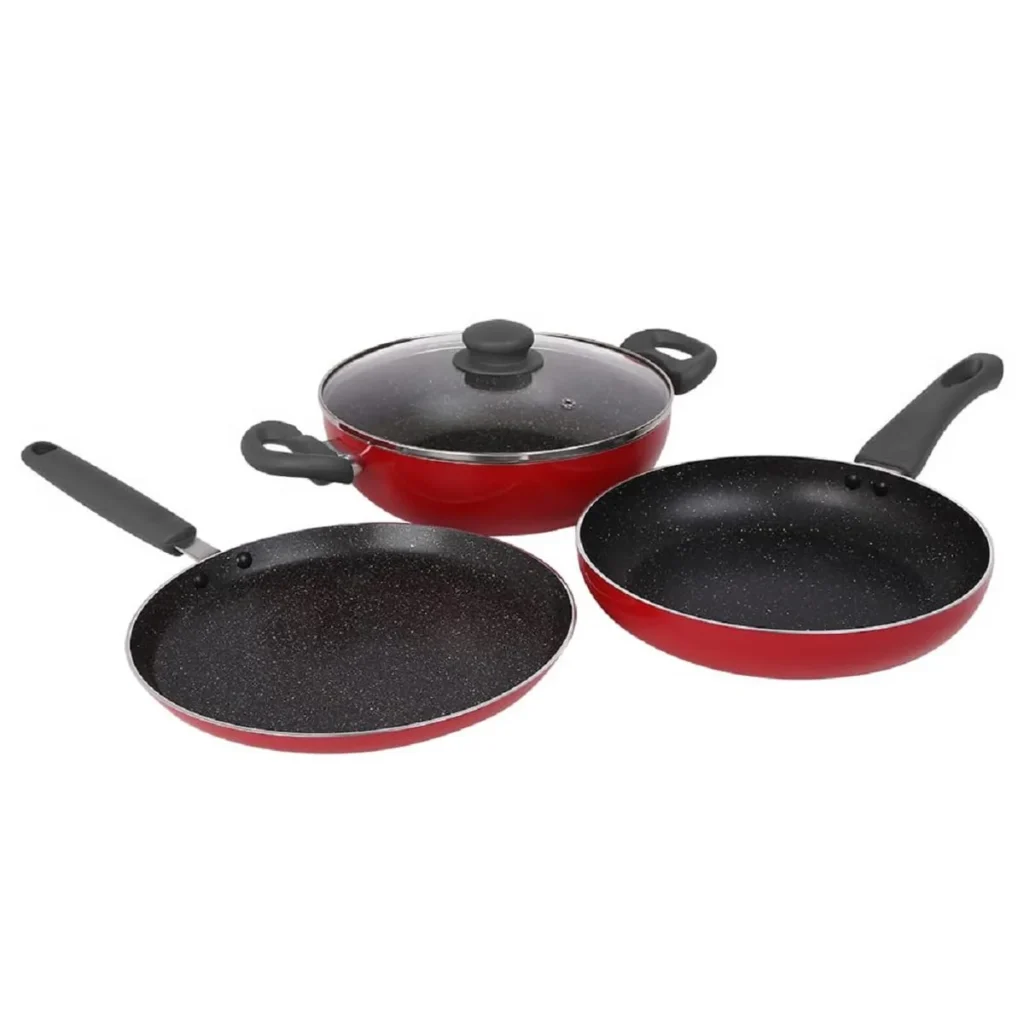
2. Cast Iron Induction Utensils
Cast iron cookware works very well on induction cooktops because iron is magnetic. Cast iron utensils are heavy, strong, and excellent for heat retention. Once heated, they stay hot for a long time.
Cast iron tawa, dosa tawa, frying pan, and kadai are popular choices for Indian cooking. They are especially good for roti, paratha, dosa, chilla, shallow frying, and traditional cooking.
Benefits of Cast Iron Induction Cookware
Cast iron gives excellent heat distribution and can improve cooking results. It is naturally chemical-free and becomes more non-stick over time if seasoned properly. Many people prefer cast iron for healthier cooking because it avoids synthetic coatings.
Limitations
Cast iron is heavy and needs care. You should dry it properly after washing to avoid rust. It also requires seasoning with oil to maintain its surface. On an induction cooktop, you should avoid dragging cast iron utensils because they can scratch the glass surface.
Best Use
Cast iron cookware is best for roti, paratha, dosa, omelette, stir-fry, shallow frying, and traditional Indian cooking.
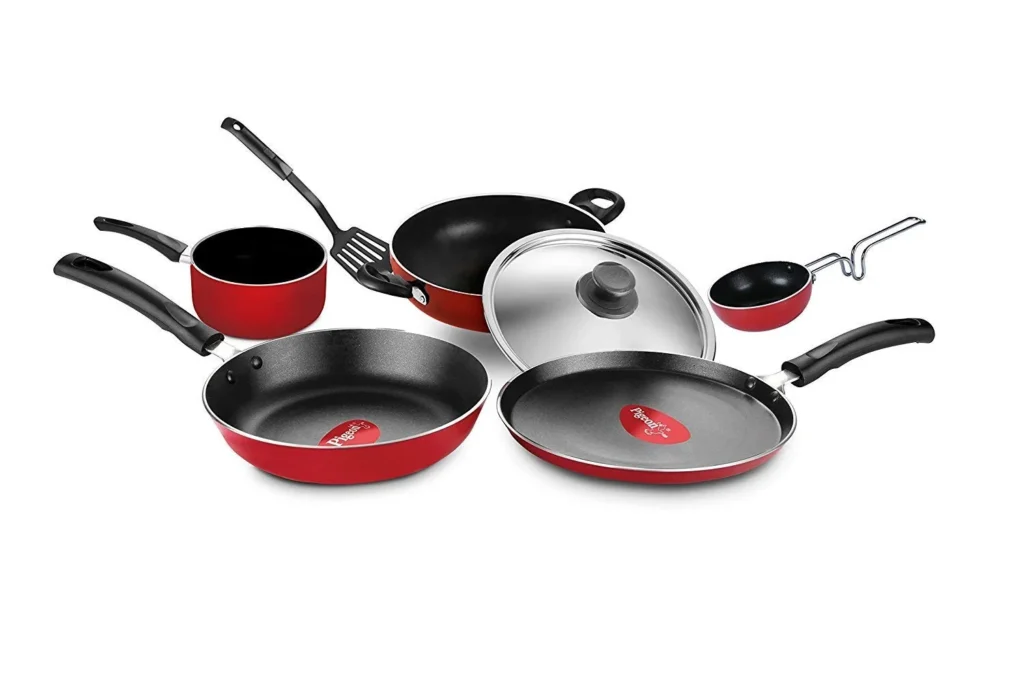
3. Hard Anodized Induction Cookware
Hard anodized cookware is made from aluminium that has been treated to make it stronger and more durable. Since aluminium alone does not work on induction, hard anodized induction cookware comes with a special magnetic base.
This type of cookware is lightweight compared to cast iron and usually stronger than normal aluminium. It is useful for daily Indian cooking and can handle medium to high heat.
Benefits of Hard Anodized Induction Cookware
Hard anodized cookware heats evenly and is usually more scratch-resistant than regular non-stick cookware. It is good for cooking sabzi, upma, poha, curry, and light frying. It also has a modern look and is easier to handle.
Limitations
Not all hard anodized cookware is induction compatible. You must check for the induction symbol or magnetic base before buying. Also, it may not be fully non-stick unless it has a coating.
Best Use
Hard anodized induction cookware is best for daily sabzi, curry, poha, upma, sautéing, and semi-dry cooking.
4. Non-Stick Induction Cookware
Non-stick induction cookware is very common in modern kitchens. It usually has an aluminium body with a magnetic induction base and a non-stick coating inside. It is especially useful for low-oil cooking.
Non-stick pans are good for omelette, pancakes, dosa, chilla, shallow frying, paneer, and quick breakfast recipes. They are also easy to clean.
Benefits of Non-Stick Induction Cookware
The main benefit is convenience. Food does not stick easily, and you can cook with less oil. Cleaning is also simple. For beginners, non-stick induction cookware is easy to use.
Limitations
Non-stick coating needs careful handling. You should not use metal spoons or harsh scrubbers. High heat can damage the coating. Once the coating starts peeling, you should replace the utensil.
Best Use
Non-stick cookware is best for dosa, omelette, pancakes, chilla, cutlets, low-oil snacks, and quick cooking.
5. Triply Stainless Steel Cookware
Triply cookware is one of the best premium options for induction cooking. It usually has three layers: stainless steel inside, aluminium core in the middle, and magnetic stainless steel outside. This design gives durability, even heating, and induction compatibility.
Triply cookware is becoming popular in Indian kitchens because it combines the strength of stainless steel with the heat distribution of aluminium.
Benefits of Triply Induction Cookware
Triply cookware heats evenly and reduces hot spots. It is durable, safe, and suitable for long-term use. It also works well on both gas and induction cooktops. For serious home cooks, triply cookware is a very good investment.
Limitations
Triply cookware is usually more expensive than normal stainless steel or non-stick cookware. It may also feel slightly heavier.
Best Use
Triply cookware is best for curries, dal, rice, frying, sautéing, gravies, and everyday cooking.
Essential Utensils for Induction Cooktop
Now let’s understand which utensils are most useful for an Indian kitchen. You do not need to buy every type of cookware at once. Start with essential items and then add more based on your cooking needs.
1. Induction Pressure Cooker
An induction pressure cooker is one of the most important utensils for Indian cooking. It is useful for cooking dal, rice, khichdi, rajma, chole, potatoes, vegetables, and many other recipes.
When buying an induction pressure cooker, choose a flat-bottom model with induction compatibility. Stainless steel pressure cookers are durable and safe. Aluminium pressure cookers may work only if they have an induction base.
For a small family, a 3-litre pressure cooker is enough. For a medium family, 5 litres is better. If you cook in large quantity, you can choose 6.5 litres or more.
Recommended Sizes
For 1–2 people, choose 2 to 3 litres.
For 3–4 people, choose 3 to 5 litres.
For 5 or more people, choose 5 to 7 litres.
2. Induction Kadai
A kadai is essential in every Indian kitchen. You can use it for sabzi, curry, deep frying, poha, upma, noodles, paneer dishes, and many other recipes.
For induction cooking, the kadai must have a flat magnetic base. Avoid round-bottom kadai because it may not sit properly on the induction cooktop. Stainless steel, hard anodized, cast iron, and triply kadai are good options.
If you do deep frying often, choose a thick-bottom kadai. A heavy base helps maintain heat and gives better frying results.
Best Kadai Material
For daily cooking, stainless steel or triply kadai is best.
For traditional cooking, cast iron kadai is excellent.
For easy cleaning, non-stick kadai is convenient.
3. Induction Tawa
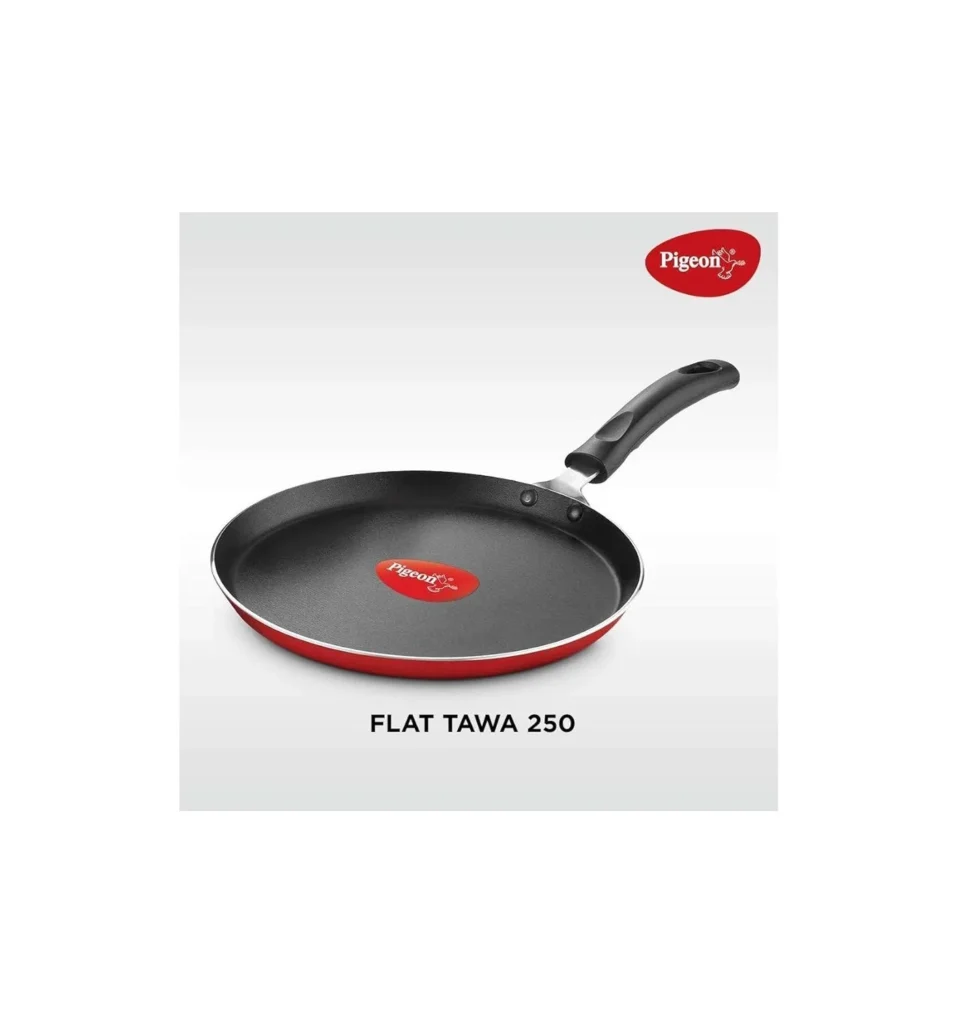
An induction tawa is very useful for roti, paratha, dosa, chilla, toast, and shallow cooking. The most important thing is that the tawa should have a flat base.
For roti and paratha, cast iron or hard anodized tawa is a good option. For dosa, you can choose cast iron or non-stick tawa. If you are a beginner, non-stick dosa tawa is easier to use.
Avoid thin tawas because they may heat unevenly and cause burning in the centre.
Best Tawa for Indian Cooking
Cast iron tawa is best for roti and dosa.
Non-stick tawa is best for beginners and low-oil cooking.
Hard anodized tawa is good for daily use.
4. Induction Frying Pan
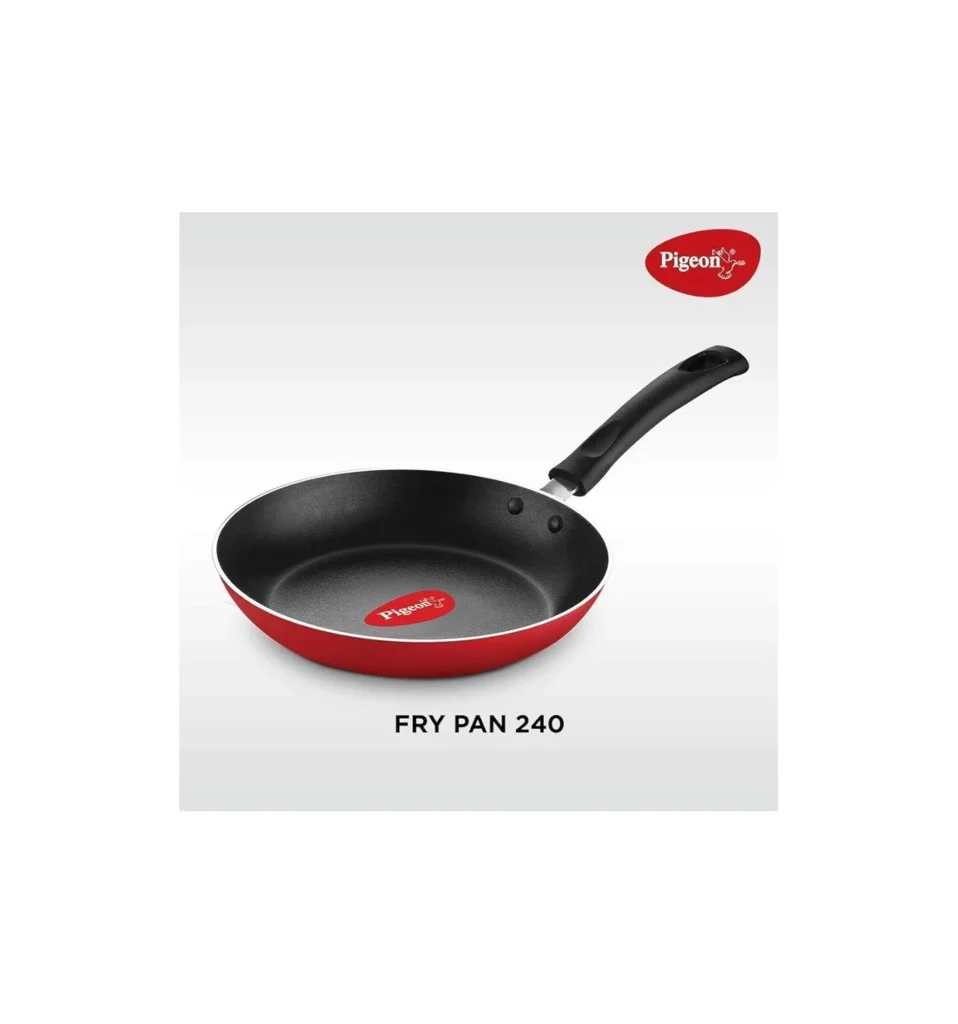
A frying pan is useful for omelette, cutlets, paneer, shallow frying, stir-frying vegetables, and breakfast recipes. A non-stick induction frying pan is very convenient for daily use.
For healthy cooking with less oil, non-stick frying pans are popular. But if you want long life and chemical-free cooking, cast iron frying pan is a better option.
Choose a frying pan with a strong handle and thick base. The pan should sit properly on the induction cooktop and should not wobble.
5. Induction Saucepan
A saucepan is useful for making tea, coffee, milk, soup, boiling eggs, boiling water, and making small quantities of curry or sauce. For most Indian homes, a 1.5-litre to 2-litre saucepan is very useful.
Stainless steel saucepans are the best choice because they are durable, safe, and easy to clean. Choose a saucepan with a lid if possible. A lid helps save energy and reduces cooking time.
6. Induction Milk Pan
A milk pan is slightly different from a saucepan. It is usually used for boiling milk, making tea, heating water, and preparing small recipes.
For induction cooking, stainless steel milk pans are best. Make sure the base is wide enough for the induction cooktop to detect it. Very small pans may not work on some induction cooktops because the sensor may not detect them properly.
7. Induction Stock Pot
A stock pot is useful for boiling pasta, making soups, cooking large quantity dal, preparing biryani, boiling vegetables, and making broth. It is especially useful for medium and large families.
Stainless steel or triply stock pots are good for induction cooktops. Choose a pot with a thick base and strong side handles.
8. Induction Handi
An induction handi is useful for biryani, pulao, curry, dal, and slow cooking. Traditional handi has a round bottom, but for induction use, you need a flat-bottom handi.
Triply stainless steel handi or induction-compatible hard anodized handi is a good option. It gives a traditional cooking feel while still working on modern induction cooktops.
9. Induction Grill Pan
A grill pan is not compulsory, but it is useful if you like grilled sandwiches, paneer tikka, vegetables, chicken, or kebabs. Cast iron grill pans work well on induction cooktops, but they are heavy.
Non-stick grill pans are easier to clean but may not last as long as cast iron. Choose based on your cooking style.
Best Utensils for Induction Cooktop for Indian Cooking
Indian cooking needs different types of cookware because we cook many varieties of food. One utensil cannot handle everything. A smart cookware set should include basic utensils for boiling, frying, roasting, sautéing, and pressure cooking.
For a normal Indian family, these are the most useful induction utensils:
- Stainless steel pressure cooker
- Stainless steel saucepan
- Flat-bottom kadai
- Induction tawa
- Non-stick frying pan
- Milk pan
- Stock pot
- Cast iron dosa tawa
- Triply handi
- Small tempering pan with induction base
This combination can handle almost all daily cooking needs.
Best Induction Utensils for Roti and Paratha
For roti and paratha, a flat tawa is very important. Cast iron tawa is one of the best options because it gives good heat retention. It helps cook roti evenly and gives better browning.
Hard anodized tawa is also good for daily use. Non-stick tawa can be used for paratha, but it may not give the same traditional taste as cast iron.
When using a tawa on induction, always start with medium heat. Do not heat an empty tawa at maximum temperature for a long time because it can damage the utensil or the induction surface.
Best Induction Utensils for Dosa
For dosa, you need a smooth and flat tawa. Cast iron dosa tawa is excellent if it is seasoned properly. It gives crispy dosa and long life. But beginners may find it slightly difficult because dosa can stick if the tawa is not seasoned well.
Non-stick dosa tawa is easier for beginners. It needs less oil and is easy to clean. However, you should use wooden or silicone spatulas to protect the coating.
Best Induction Utensils for Deep Frying
For deep frying, choose a thick-bottom kadai. Cast iron kadai, stainless steel kadai, or triply kadai are good options. Avoid very thin cookware because oil temperature may fluctuate quickly.
A good induction kadai should have a flat base and enough depth. For Indian snacks like samosa, pakora, puri, kachori, and bhajiya, a medium-size kadai works well.
Best Induction Utensils for Tea and Milk
For tea and milk, stainless steel saucepan or milk pan is the best choice. It heats quickly and is easy to clean. Choose a pan with a pouring edge if you make tea daily.
Avoid very small base utensils because some induction cooktops may not detect them. A base diameter of around 12 cm or more usually works better on most induction cooktops.
Best Induction Utensils for Dal and Rice
For dal and rice, an induction pressure cooker is the most useful utensil. Stainless steel pressure cookers are safe and durable. You can also use a stock pot or saucepan for open cooking, but pressure cooking saves time and electricity.
For families, a 3-litre and 5-litre pressure cooker combination is very practical.
How to Choose the Best Utensils for Induction Cooktop
Buying induction cookware is not only about design or brand. You should check some important features before purchase.
1. Check Induction Compatibility
Always check whether the cookware is induction compatible. Look for the induction symbol at the bottom or do the magnet test. If the base is not magnetic, it will not work on an induction cooktop.
2. Choose a Flat Base
The base should be completely flat. A flat base gives better contact with the induction glass surface. It also improves heating efficiency and reduces cooking time.
Avoid round-bottom utensils unless they are specially designed with a flat induction base.
3. Select the Right Size
The cookware base should match the heating zone of your induction cooktop. If the utensil is too small, the cooktop may not detect it. If it is too large, heating may not spread evenly.
For daily use, medium-sized cookware is best. A 24 cm kadai, 26 cm tawa, 20 cm frying pan, and 2-litre saucepan are useful sizes for most homes.
4. Prefer Thick Base Cookware
A thick base gives better heat distribution and prevents food from burning quickly. Thin cookware may heat too fast and cause uneven cooking.
For Indian cooking, thick-bottom utensils are always better because our recipes often involve frying, tempering, boiling, and slow cooking.
5. Check Handle Quality
Handles should be strong and heat-resistant. For kadai and stock pots, side handles should be firmly attached. For frying pans and saucepans, long handles should provide good grip.
Avoid cookware with weak plastic handles because they may become loose over time.
6. Choose Cookware Based on Your Cooking Style
If you cook daily meals, stainless steel and triply cookware are best. If you cook dosa and roti often, cast iron tawa is useful. If you want low-oil cooking, non-stick cookware is convenient.
Do not buy a full cookware set without thinking about your actual cooking needs.
Induction Cookware Set vs Individual Utensils
Many brands sell induction cookware sets. These sets usually include a kadai, frying pan, tawa, and sometimes a saucepan. A cookware set can be good for beginners because you get multiple utensils together.
However, individual utensils allow you to choose better quality for each purpose. For example, you may want a stainless steel saucepan, cast iron tawa, triply kadai, and non-stick frying pan. A single set may not give the best material for every cooking need.
If you are starting from zero, a basic induction cookware set is useful. But if you want long-term quality, buying individual utensils is better.
Best Cookware Combination for Induction Cooktop
For a balanced Indian kitchen, this combination is highly practical:
Basic Starter Set
- 1 induction pressure cooker
- 1 stainless steel saucepan
- 1 induction kadai
- 1 induction tawa
- 1 non-stick frying pan
This is enough for basic cooking.
Complete Family Set
- 3-litre pressure cooker
- 5-litre pressure cooker
- Stainless steel saucepan
- Milk pan
- Triply kadai
- Cast iron tawa
- Non-stick dosa tawa
- Stock pot
- Frying pan
- Handi
This set can handle almost every Indian cooking need.
Utensils You Should Avoid on Induction Cooktop
Not all cookware is suitable for induction cooking. You should avoid:
- Pure aluminium utensils without induction base
- Pure copper utensils without induction base
- Glass cookware
- Ceramic cookware without magnetic base
- Round-bottom kadai
- Uneven or damaged base utensils
- Very small utensils
- Cookware with weak or loose handles
Using the wrong utensil may cause error messages, poor heating, or no heating at all.
Can Aluminium Utensils Work on Induction Cooktop?
Pure aluminium does not work on induction because it is not magnetic. However, many aluminium cookware products come with an induction-compatible stainless steel base. These can work on induction cooktops.
So, if you want aluminium or non-stick cookware, make sure it has an induction base.
Can Copper Utensils Work on Induction Cooktop?
Pure copper utensils do not work on induction cooktops unless they have a magnetic base. Copper cookware is excellent for heat conductivity, but it is not naturally induction compatible.
Some premium copper-bottom cookware may work if the base includes magnetic stainless steel. Always check product details before buying.
Can Glass Utensils Work on Induction Cooktop?
Glass utensils do not work directly on induction cooktops because they are not magnetic. You should avoid using glass cookware on induction unless it is specially designed with an induction-compatible base, which is rare.
Can Clay Pots Work on Induction Cooktop?
Traditional clay pots do not work on induction cooktops. Some special clay pots come with induction bases, but they are not very common. If you want clay-pot style cooking, check carefully before buying.
Safety Tips for Using Induction Utensils
Induction cooking is safe, but proper use is important.
Do not drag utensils on the glass surface. Always lift and place them gently. Heavy cast iron cookware can scratch the induction cooktop if dragged.
Do not use damaged or bent cookware. Uneven bases can affect heating and may damage the cooktop.
Do not heat empty cookware for a long time. This can damage the utensil and reduce its life.
Use cookware with dry bottoms. Water on the bottom may create noise or stains on the cooktop surface.
Clean the induction cooktop after use. Spilled food can burn on the glass surface if not cleaned.
Use proper heat settings. Induction heats very fast, so you do not always need maximum power.
Maintenance Tips for Induction Cookware
Good cookware can last for years if maintained properly.
For stainless steel cookware, wash with mild dish soap and avoid harsh scrubbers. If food sticks, soak the utensil in warm water before cleaning.
For non-stick cookware, use wooden, nylon, or silicone spatulas. Do not use metal spoons. Avoid overheating the pan.
For cast iron cookware, dry immediately after washing. Apply a thin layer of oil to prevent rust. Do not leave water in cast iron utensils.
For hard anodized cookware, avoid steel scrubbers. Use soft cleaning pads.
For triply cookware, clean after cooling. Avoid sudden temperature changes like putting a hot pan directly under cold water.
Common Mistakes While Buying Induction Utensils
Many people buy cookware only by looking at design or price. This can lead to wrong purchase decisions.
The first common mistake is buying cookware without checking induction compatibility. Always check the base.
The second mistake is choosing very thin cookware. Thin cookware may be cheap, but it may not cook evenly.
The third mistake is buying a full cookware set without checking actual needs. Sometimes sets include utensils you may never use.
The fourth mistake is choosing very small pans. Some induction cooktops may not detect small utensils.
The fifth mistake is ignoring handle quality. A good handle improves safety and comfort.
Best Utensils for Induction Cooktop: Final Buying Advice
If you want durable cookware for long-term use, choose stainless steel or triply cookware. If you want traditional cooking and excellent heat retention, choose cast iron. If you want easy cleaning and low-oil cooking, choose non-stick induction cookware. If you want a balance of durability and lightweight handling, hard anodized cookware is also a good choice.
For most Indian homes, the best cookware combination is a stainless steel pressure cooker, triply or stainless steel kadai, cast iron tawa, non-stick frying pan, stainless steel saucepan, and milk pan. This combination covers daily cooking needs without wasting money on unnecessary utensils.
Conclusion
Choosing the Best Utensils for Induction Cooktop is very important for safe, fast, and efficient cooking. An induction cooktop can save time and energy, but it performs well only when you use the right cookware. For Indian cooking, you should focus on flat-bottom, magnetic-base, thick, and durable utensils.
Stainless steel cookware is best for daily use, cast iron is excellent for roti and dosa, non-stick cookware is convenient for low-oil cooking, and triply cookware is a premium long-term option. If you are setting up a new kitchen, start with essential utensils like pressure cooker, kadai, tawa, frying pan, saucepan, and milk pan. Later, you can add stock pot, handi, grill pan, or other cookware based on your cooking habits.
With the right induction utensils, your cooking experience becomes faster, cleaner, safer, and more enjoyable.