
Table of Contents
ToggleHow to Choose the Best Induction Cooktop for Indian Cooking
Induction cooktops have become one of the most useful kitchen appliances in Indian homes. Whether you live in a small flat, hostel, PG, rented room, family kitchen, or you simply want a backup cooking option when LPG is not available, an induction cooktop can make daily cooking faster, cleaner, and more convenient.
But choosing the right induction cooktop is not always easy. In India, you will find many models with different wattage, touch controls, preset menus, glass tops, safety features, timer options, and price ranges. Some models are good only for tea, milk, boiling, and simple cooking, while others are powerful enough for chapati, dosa, deep frying, pressure cooking, dal, rice, sabzi, and regular Indian meals.
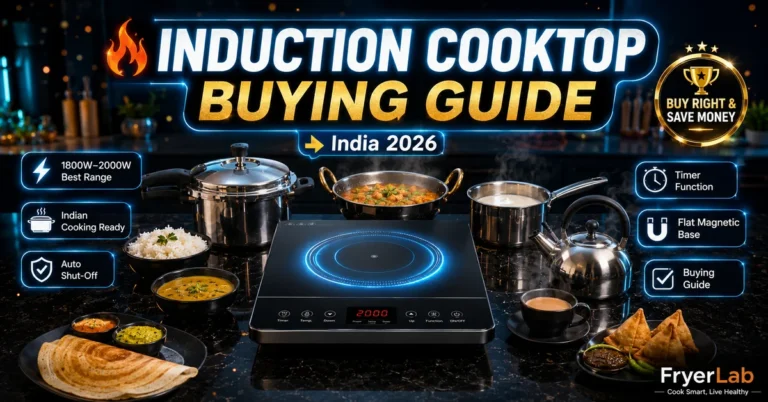
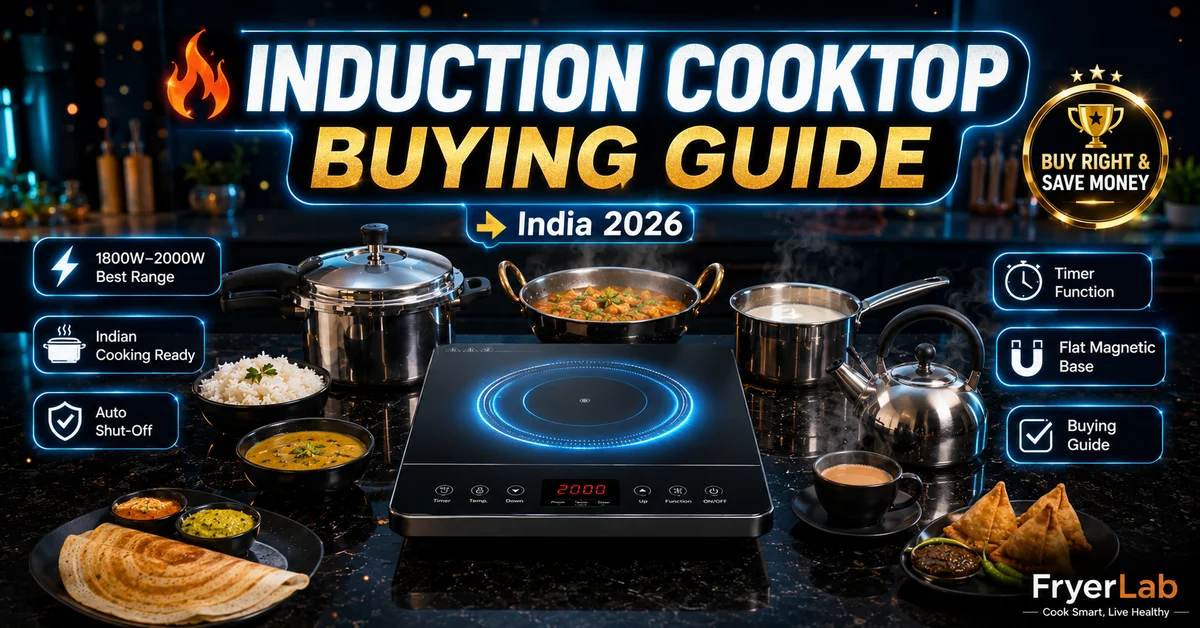
That is why this detailed Induction Cooktop Buying Guide will help you understand everything before buying. In this guide, we will discuss wattage, cookware compatibility, control panel, safety features, power consumption, build quality, Indian cooking needs, cleaning, price range, common mistakes, and final buying tips.
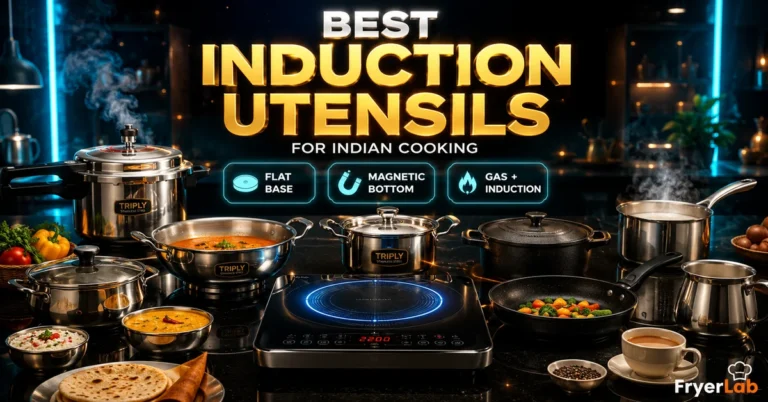
Induction cooking works by using electromagnetic heating, which directly heats compatible cookware instead of heating a flame or coil first. This makes induction cooking fast and efficient, but it also means your cookware must have a magnetic flat base to work properly. Induction-friendly cookware is usually made with magnetic stainless steel, iron, cast iron, or a compatible induction base. A simple magnet test can help you check if your vessel works on induction: if the magnet sticks firmly to the bottom, the cookware is likely induction-compatible.
What Is an Induction Cooktop?
An induction cooktop is an electric cooking appliance that uses electromagnetic energy to heat the vessel directly. Unlike a gas stove, it does not use flame. Unlike a regular electric hot plate, it does not first heat a metal coil and then transfer heat to the vessel. Instead, it creates a magnetic field under the glass surface, and when you place an induction-compatible vessel on it, the vessel itself heats up.
This is the main reason induction cooktops heat food quickly. The heat is generated in the cookware, so less heat is wasted around the sides. The cooktop surface may still become warm because of the hot vessel, but the main heating happens inside the cookware base.
This Induction Cooktop Buying Guide is especially useful for Indian cooking because our kitchens need more than just boiling water. We cook tea, milk, dal, rice, curry, dosa, chapati, poha, upma, pressure cooker meals, frying items, and reheating food. So, you should not buy an induction cooktop only by looking at price. You must check whether it is powerful, safe, stable, and suitable for your cooking style.
Why Buy an Induction Cooktop in India?
An induction cooktop is not always a complete replacement for a gas stove for every family, but it is a very useful appliance. Many Indian households use induction as a second cooking option. It is also popular among students, bachelors, office workers, hostel users, and people living in rented homes.
Main Benefits of an Induction Cooktop
- Fast cooking
Induction cooktops heat vessels quickly, so boiling water, making tea, cooking rice, and reheating food can be faster than many traditional methods. - Clean kitchen experience
There is no flame, no soot, and no black marks on utensils when used properly. - Easy to clean
Most induction cooktops have a flat glass or ceramic surface. You can wipe it with a soft cloth after it cools down. - Good for small spaces
It is compact and easy to keep on a kitchen counter, table, or small platform. - Useful backup during LPG issues
If your gas cylinder gets empty, an induction cooktop can help you continue cooking. - Safer than open flame cooking
There is no open flame, which reduces flame-related risk. Still, you must use it carefully because hot vessels can heat the surface. - Suitable for modern kitchens
It gives a clean and organized look to the kitchen.
The Bureau of Energy Efficiency has also worked on energy-efficiency labeling for induction cookstoves in India, with the program launched in March 2023, showing that efficient electric cooking is becoming more important in the Indian market.
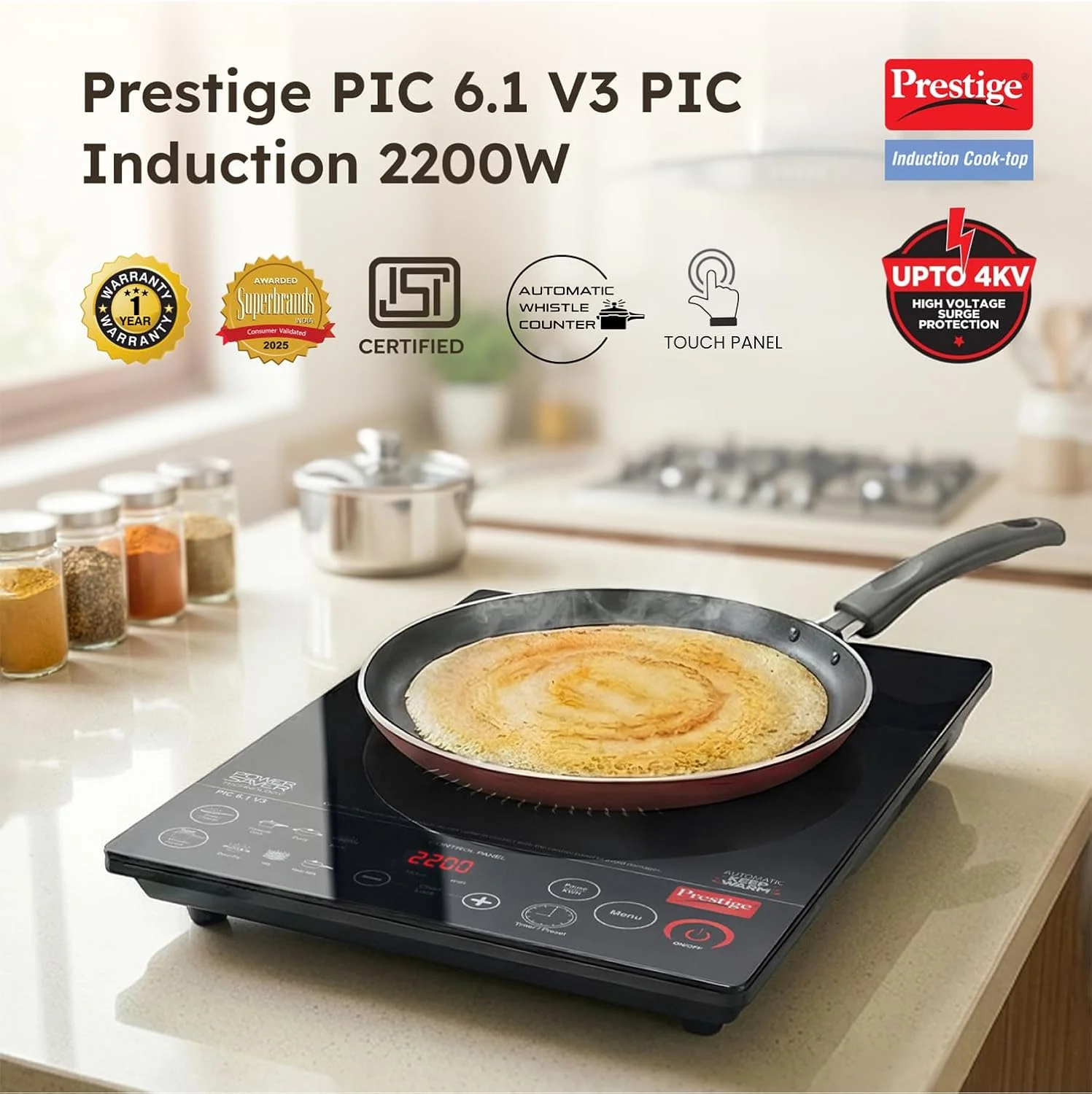
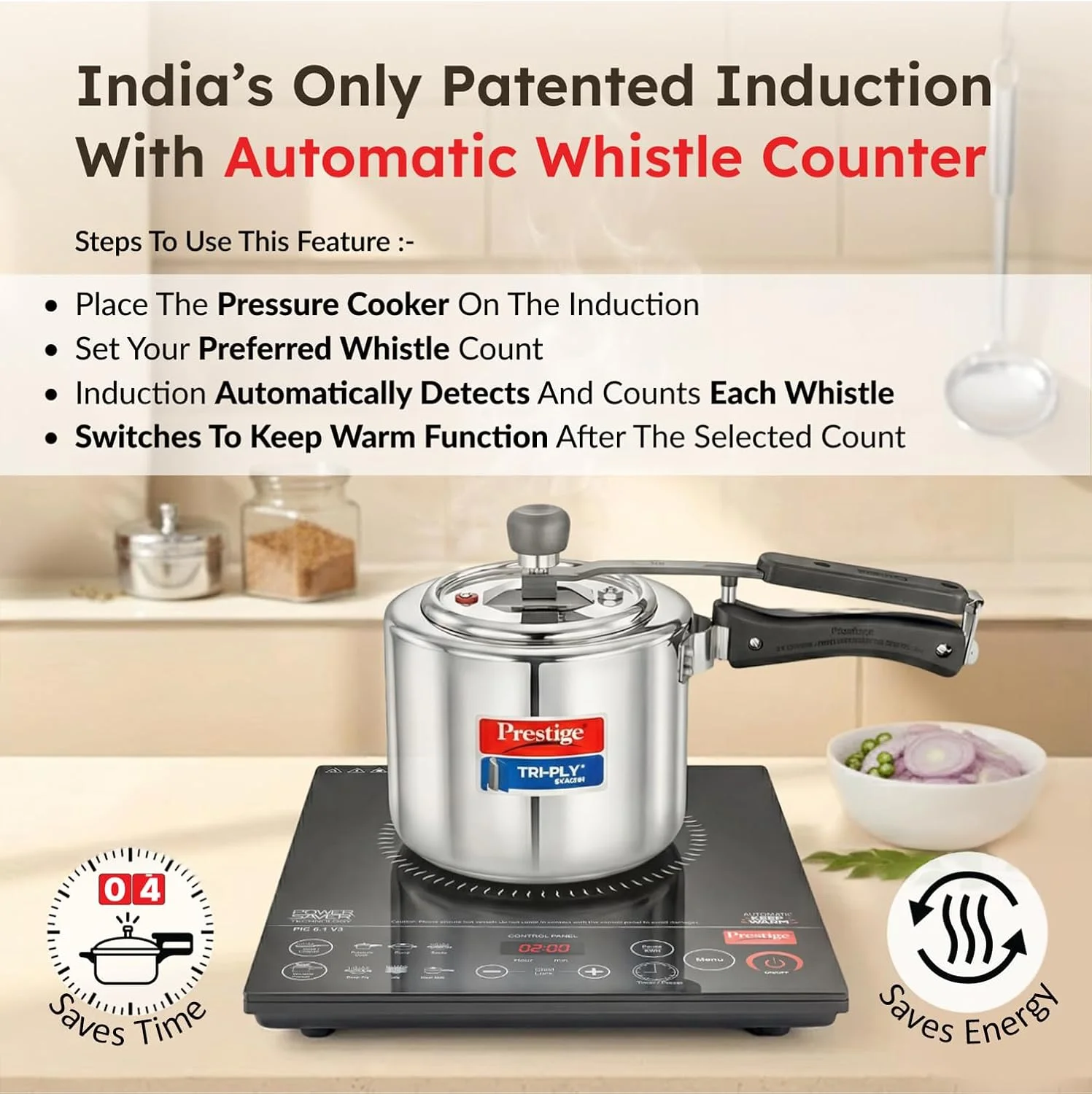
Induction Cooktop Buying Guide: Quick Checklist
Before going into deep details, here is a simple checklist.
| Feature | Recommended for Indian Homes |
|---|---|
| Best for basic use | 1200W to 1600W |
| Best for regular Indian cooking | 1800W to 2000W |
| Best for fast cooking/frying | 2000W to 2200W |
| Cookware | Flat magnetic base |
| Controls | Push button or touch control |
| Safety | Auto shut-off, overheating protection |
| Surface | Good-quality glass/ceramic plate |
| Presets | Indian cooking menus are useful |
| Timer | Helpful for boiling, dal, rice, milk |
| Warranty | Minimum 1 year preferred |
| Brand support | Service center availability matters |
This Induction Cooktop Buying Guide will now explain each point in detail.
1. Check the Wattage First
Wattage is one of the most important things to check before buying an induction cooktop. In simple words, wattage decides how powerful and fast the induction cooktop is.
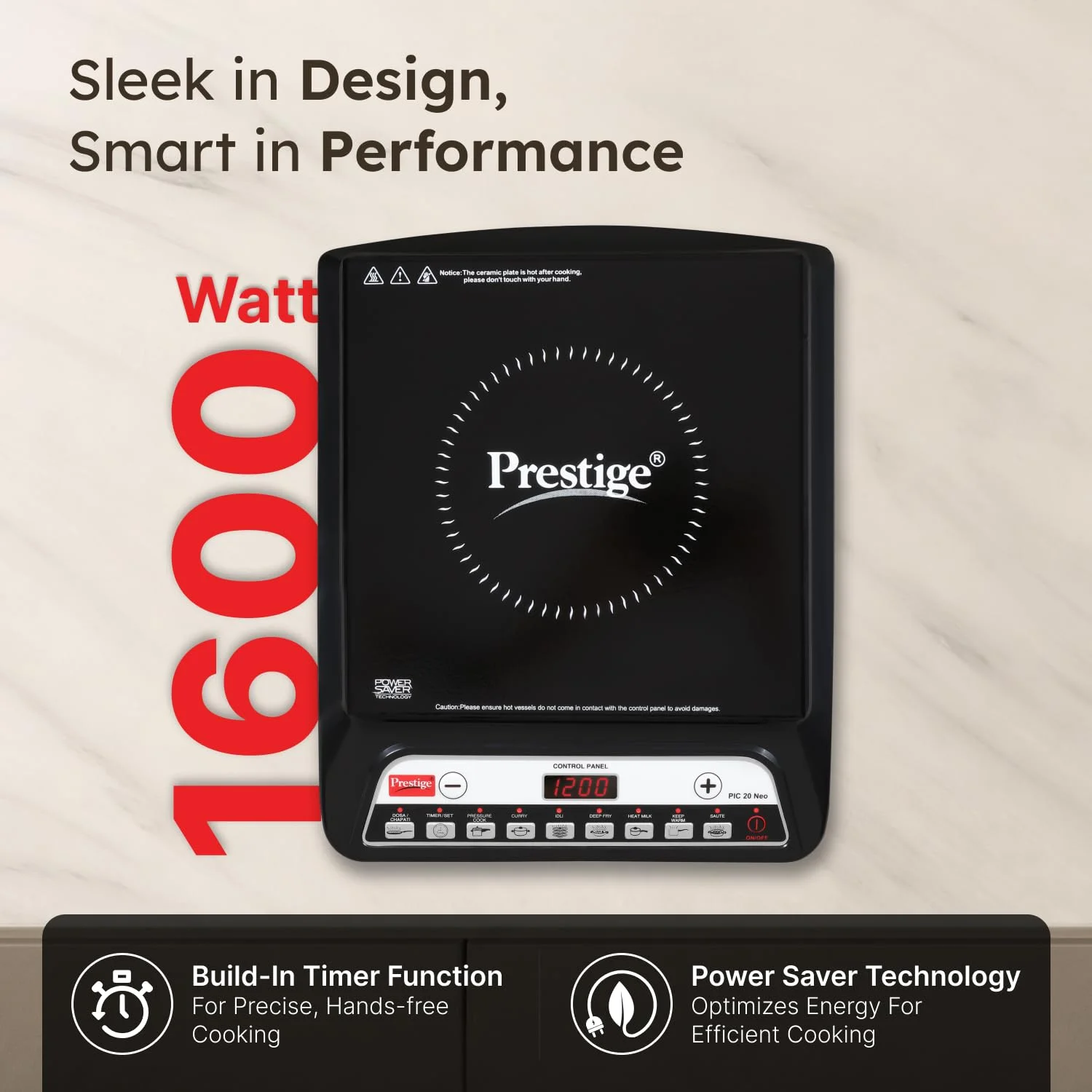
In India, most induction cooktops come between 1200W and 2200W. A 1500W induction cooktop is suitable for basic cooking, but 2000W or higher is usually better for faster heating, frying, and more demanding cooking.
1200W to 1400W Induction Cooktop
This range is suitable for very basic use. You can make tea, boil milk, heat water, cook instant noodles, and reheat food. But it may feel slow for regular Indian meals.
Best for:
Students
Hostel rooms
Light cooking
Tea, milk, boiling
Emergency backup
Not ideal for:
Deep frying
Fast pressure cooking
Large family cooking
Heavy Indian cooking
1500W to 1600W Induction Cooktop
This is a better option than low-watt models. It can handle basic cooking and some regular meals, but it may still take time for frying and large quantity cooking.
Best for:
Small families
Bachelors
Light daily cooking
Rice, dal, tea, milk, boiling
1800W to 2000W Induction Cooktop
This is the most balanced range for Indian homes. If you are buying an induction cooktop for regular Indian cooking, this range is usually better. It gives good heating speed and works well for pressure cooker, sabzi, dal, rice, dosa, and basic frying.
Best for:
Most Indian families
Daily cooking
Pressure cooker use
Faster boiling
Regular sabzi, dal, rice
Better temperature control
2100W to 2200W Induction Cooktop
This is a high-power range. It is useful if you want faster heating and better high-temperature cooking. However, it may consume more electricity at full power, and you must ensure your kitchen socket and wiring are suitable.
Best for:
Fast cooking
Frying
Large quantity cooking
Heavy-duty use
Users who want faster performance
FryerLab Recommendation
For most Indian homes, choose an induction cooktop between 1800W and 2000W. If you want faster cooking and your kitchen wiring supports it, a 2000W to 2200W model is better.
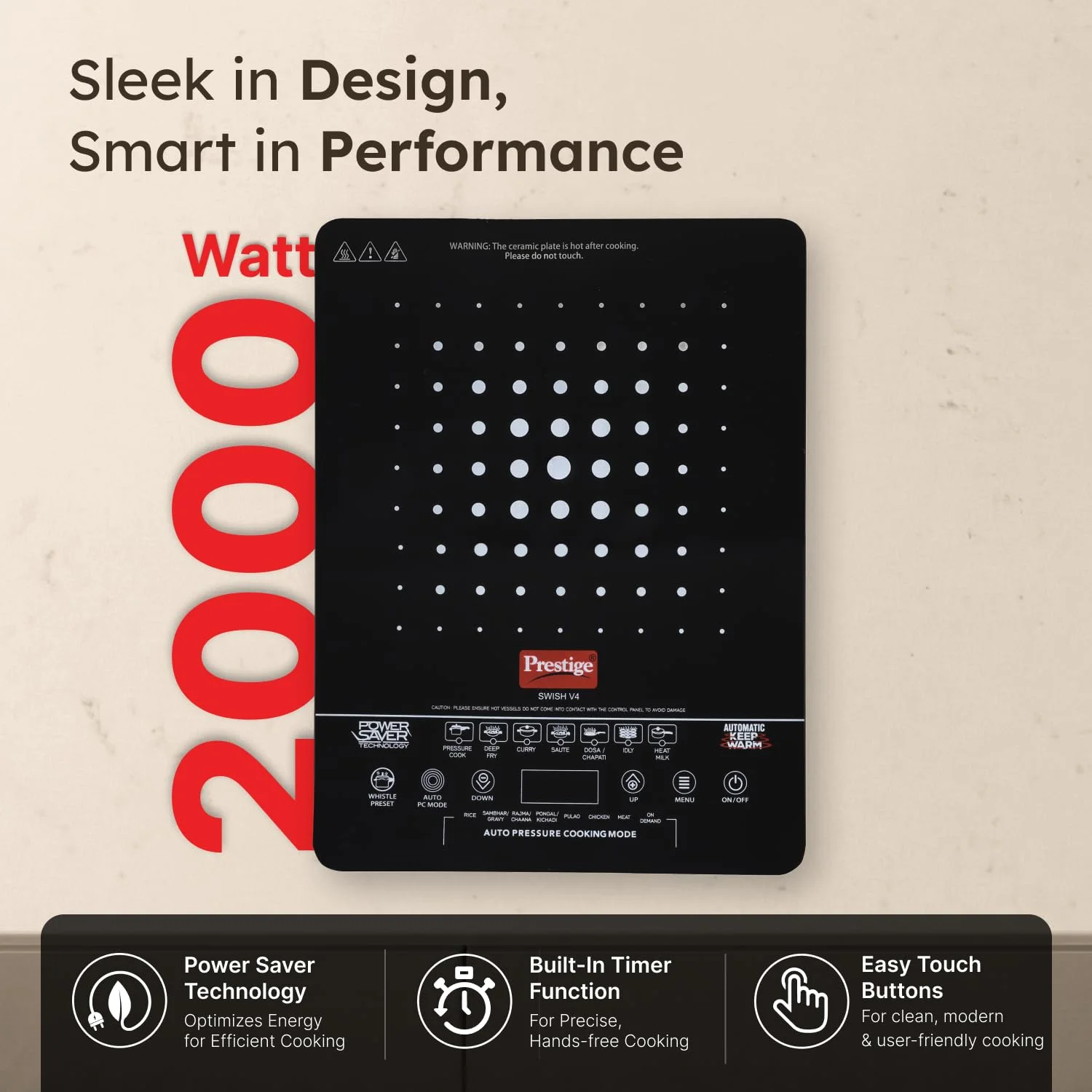
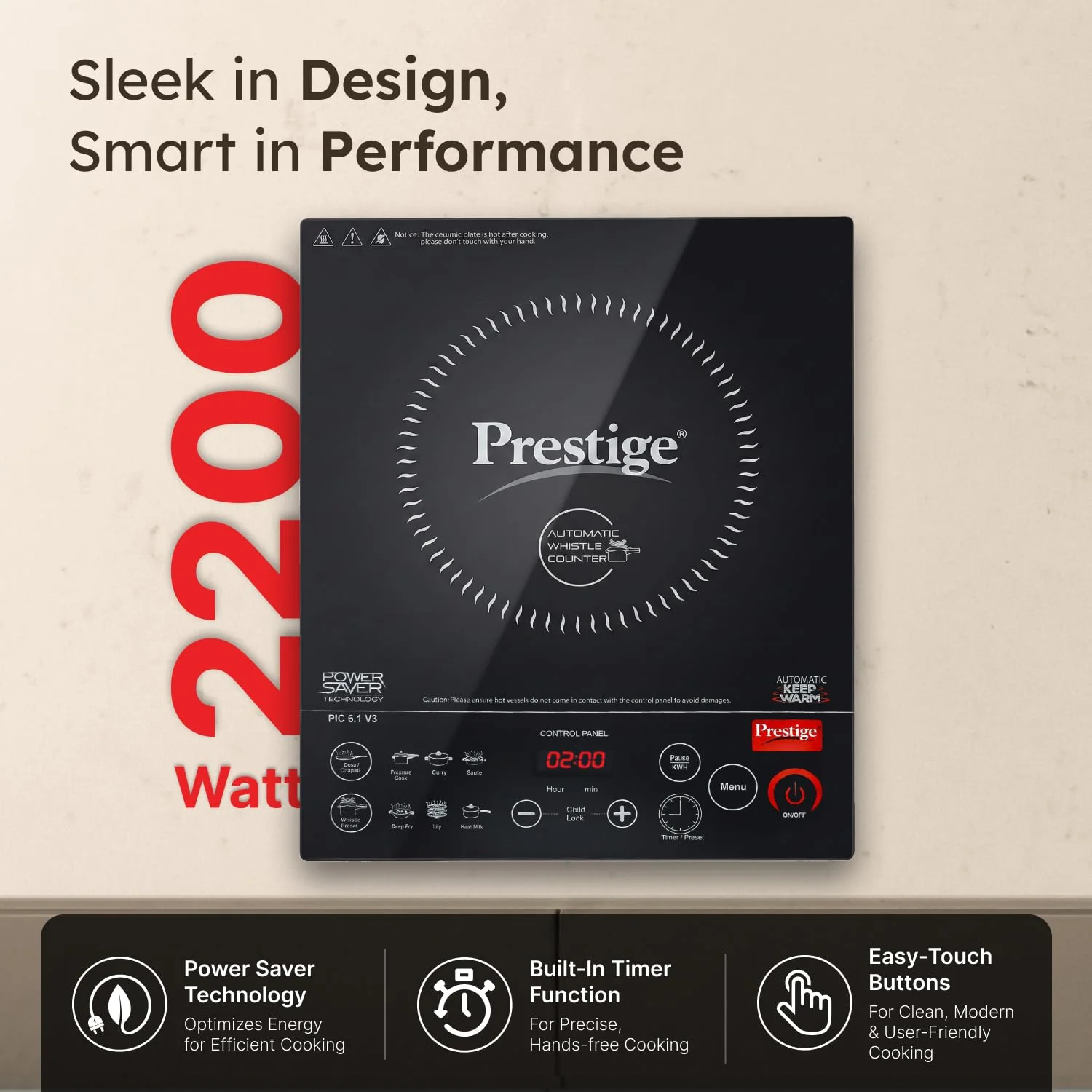
2. Understand Power Consumption
Many people think that a high-watt induction cooktop always creates a very high electricity bill. But this is not always true. The actual electricity use depends on wattage, cooking time, power level, and how often you use it.
For example, a 2000W induction cooktop running at full power for 1 hour can use around 2 units of electricity. But in real cooking, the appliance does not always run at full power continuously. You may reduce heat after boiling, use medium temperature for cooking, or use timer mode.
- Simple Power Usage Example
| Usage | Approximate Consumption |
|---|---|
| 2000W for 30 minutes | Around 1 unit |
| 2000W for 1 hour | Around 2 units |
| 1000W for 1 hour | Around 1 unit |
| 1500W for 30 minutes | Around 0.75 unit |
This is only a simple estimate. Your actual bill depends on electricity rate in your area and cooking habits.
How to Save Electricity on Induction
- Use flat-bottom cookware
- Cover vessels while boiling
- Match vessel size with heating area
- Avoid using very small vessels on a large cooktop
- Use timer for boiling and slow cooking
- Do not cook everything at full power
- Use pressure cooker for dal, rice, and beans
- Switch off after cooking
This Induction Cooktop Buying Guide recommends buying a powerful model but using it smartly. A higher wattage model gives flexibility, but you do not need to use maximum power all the time.
3. Check Cookware Compatibility
This is one of the biggest mistakes people make. Not every utensil works on an induction cooktop. Your cookware must have a magnetic base.
Induction-compatible cookware generally includes:
- Stainless steel with induction base
- Cast iron cookware
- Iron tawa
- Induction-compatible pressure cooker
- Induction-compatible kadai
- Triply cookware with magnetic base
- Some enamel-coated iron vessels
Cookware that may not work:
- Pure aluminium without induction base
- Pure copper vessels
- Glass cookware
- Ceramic-only cookware
- Round-bottom kadai without flat base
- Non-magnetic stainless steel
- Clay pots
A magnet test is one of the easiest ways to check compatibility. If a magnet sticks strongly to the base of the cookware, it will likely work on induction. Also, cookware with a flat base gives better contact, heating, and performance.
- Why Flat Base Is Important
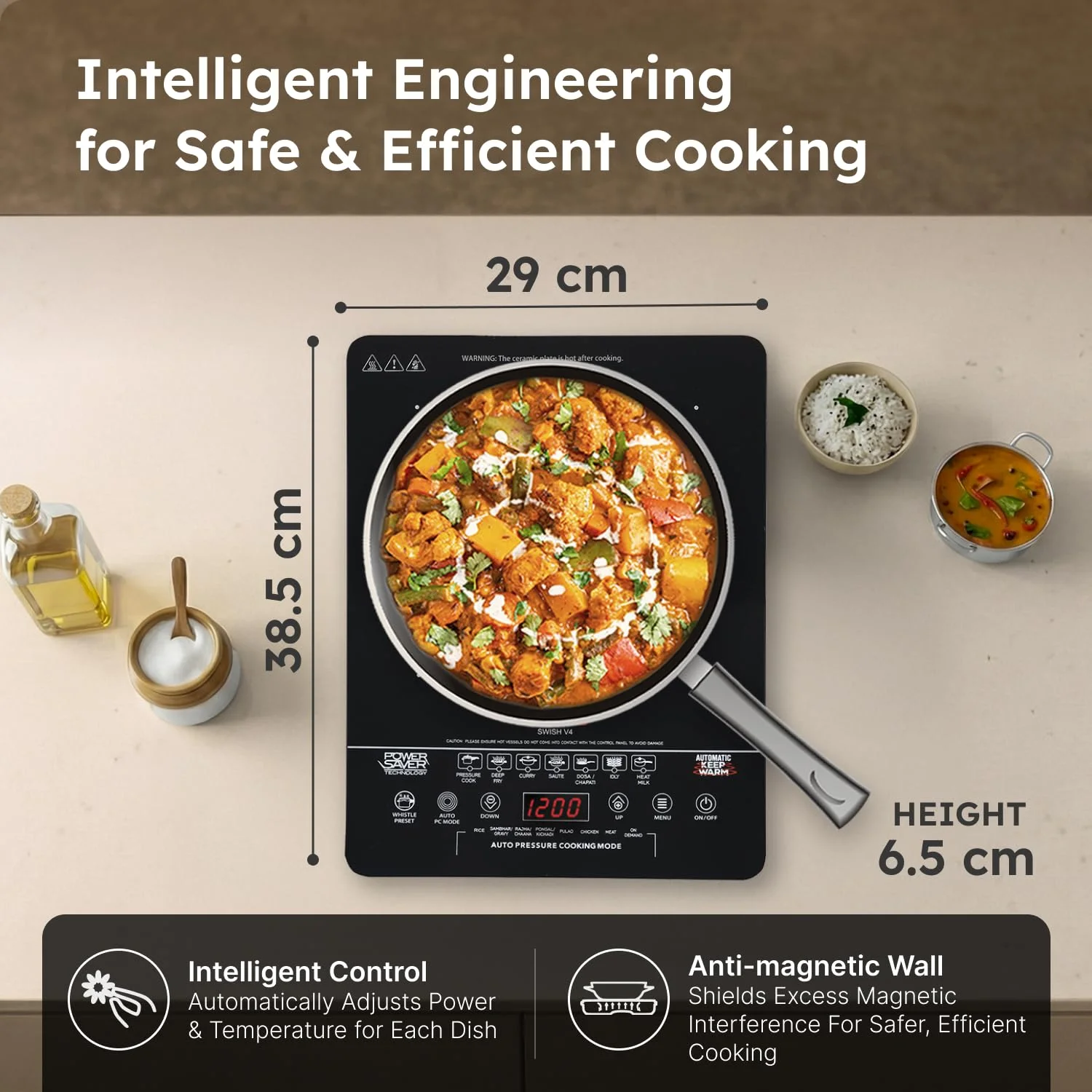
A flat base is very important because the induction surface needs proper contact with the vessel. If the base is curved, uneven, or too small, heating may become slow or uneven. Sometimes the cooktop may show an error.
Thin, lightweight, or warped cookware can also create buzzing or vibration sounds on induction cooktops. This usually happens because the cookware base does not sit firmly on the surface. Using thicker, flat, induction-compatible cookware can reduce noise and improve cooking performance.
- FryerLab Tip
Before buying an induction cooktop, check your existing utensils. If most of your cookware is not induction-compatible, you may need to buy an induction pressure cooker, tawa, kadai, and saucepan. This increases the total cost.
4. Choose the Right Size and Design
Most portable induction cooktops in India are single-burner models. They are compact and easy to move. But size still matters.
A good induction cooktop should have:
- Stable base
- Good glass top area
- Enough space for medium vessels
- Strong body material
- Clear display
- Easy-to-use buttons
- Proper ventilation
Compact Induction Cooktop
Good for:
- Hostel
- PG
- Small kitchen
- Travel use
- Backup cooking
Large Surface Induction Cooktop
Good for:
- Family kitchen
- Regular cooking
- Bigger pressure cooker
- Kadai cooking
- Larger vessels
Build Quality Matters
Do not buy only the cheapest model. Very low-cost induction cooktops may have weak buttons, poor glass quality, low-grade plastic body, or limited safety features. Since an induction cooktop uses high power, build quality is important.
This Induction Cooktop Buying Guide recommends checking the top plate quality, body strength, button quality, and ventilation design before buying.
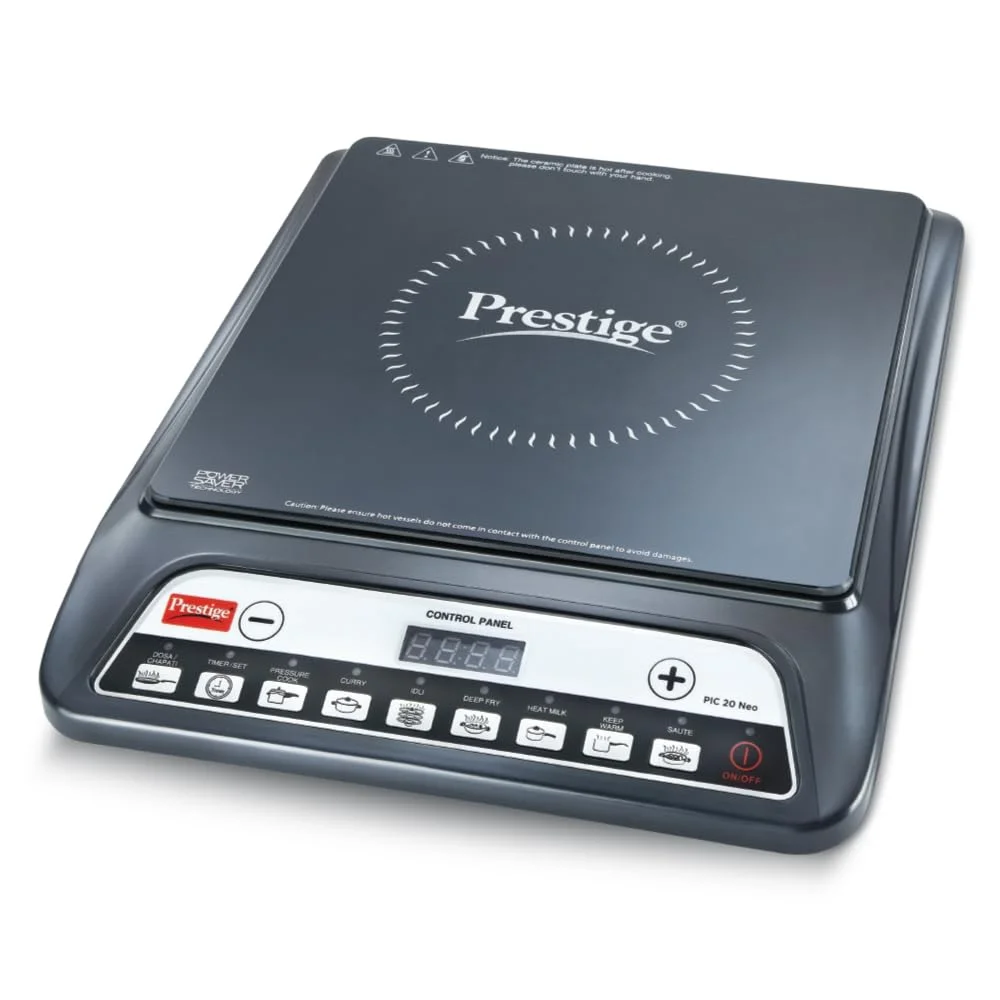
5. Control Panel: Push Button vs Touch Control
Induction cooktops usually come with two types of controls:
Push button control
Touch control
Push Button Control
Push button models are simple and easy to use. They are good for people who want practical controls and do not care much about premium design.
Pros:
Easy to operate
Good for elderly users
Usually cheaper
Works even if fingers are slightly wet
Simple and durable
Cons:
Buttons may wear out over time
Cleaning around buttons can be slightly harder
Looks less premium
Touch Control
Touch control models look modern and premium. They are easier to clean because the surface is flat.
Pros:
Premium look
Easy to clean
Smooth operation
Modern design
Cons:
May not respond well with wet fingers
Usually costlier
Repair cost may be higher
Which One Should You Choose?
For basic and rough daily use, push button control is practical. For a modern kitchen and easy cleaning, touch control is better. Both are good if the brand quality is reliable.
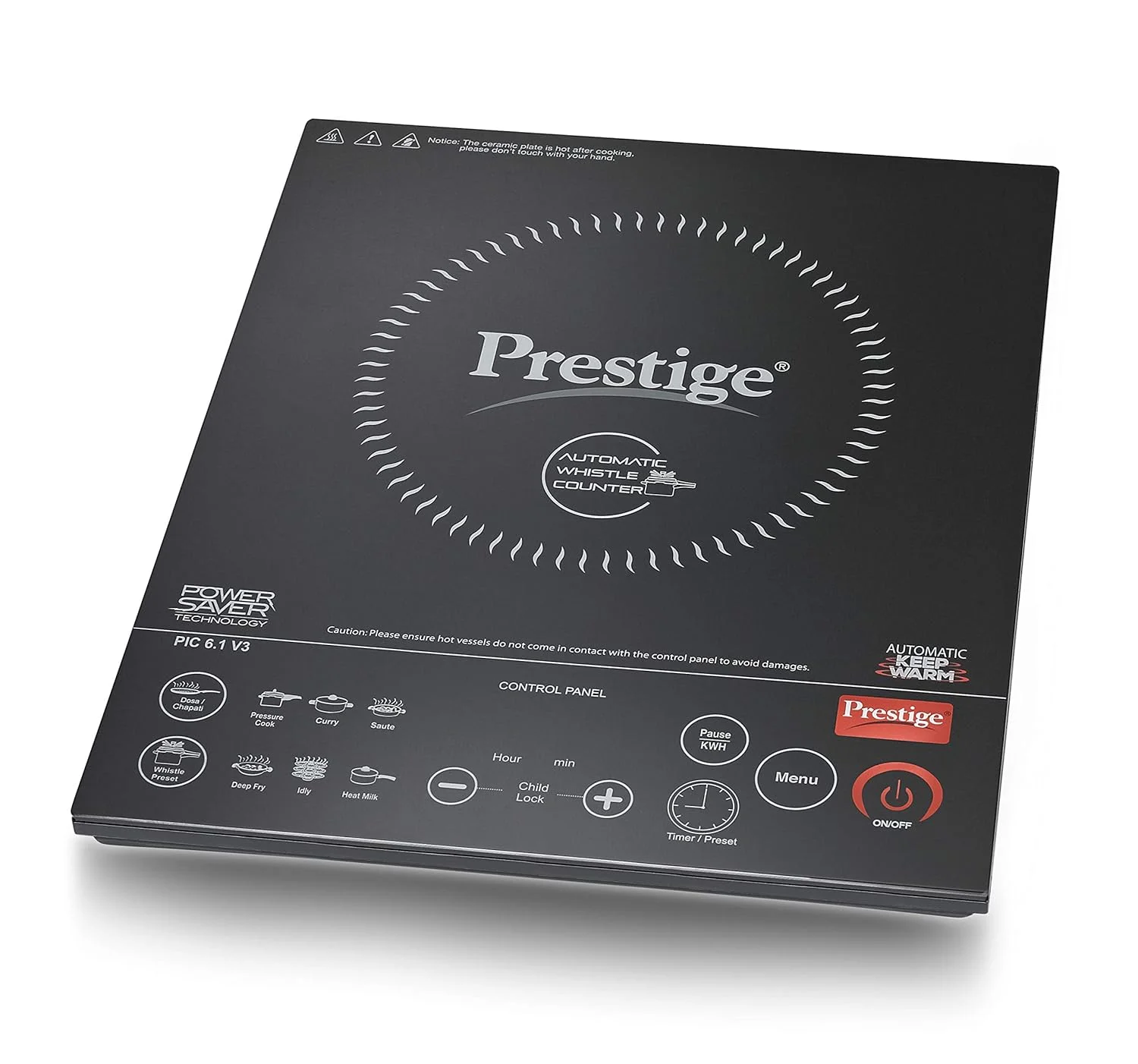
6. Look for Indian Cooking Preset Menus
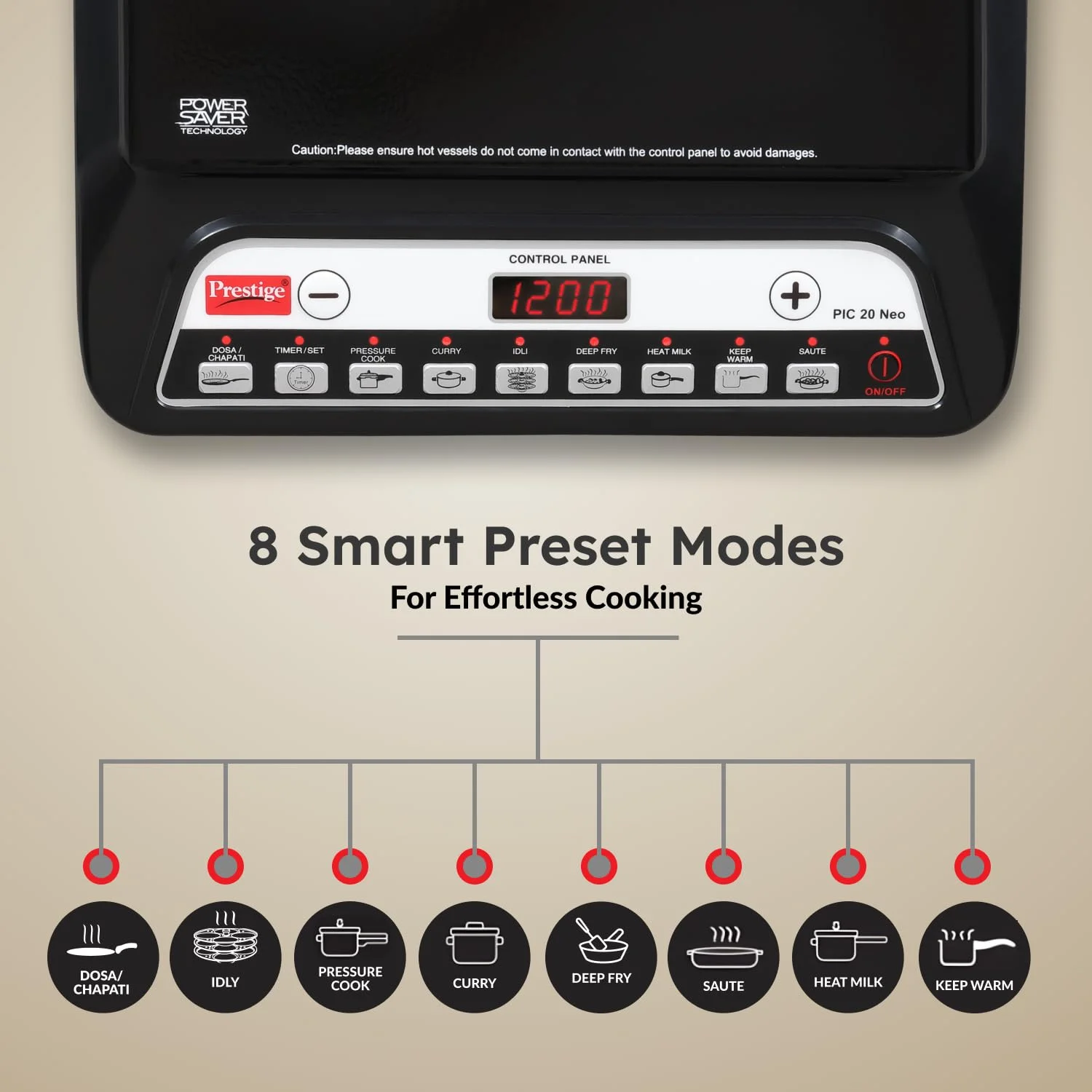
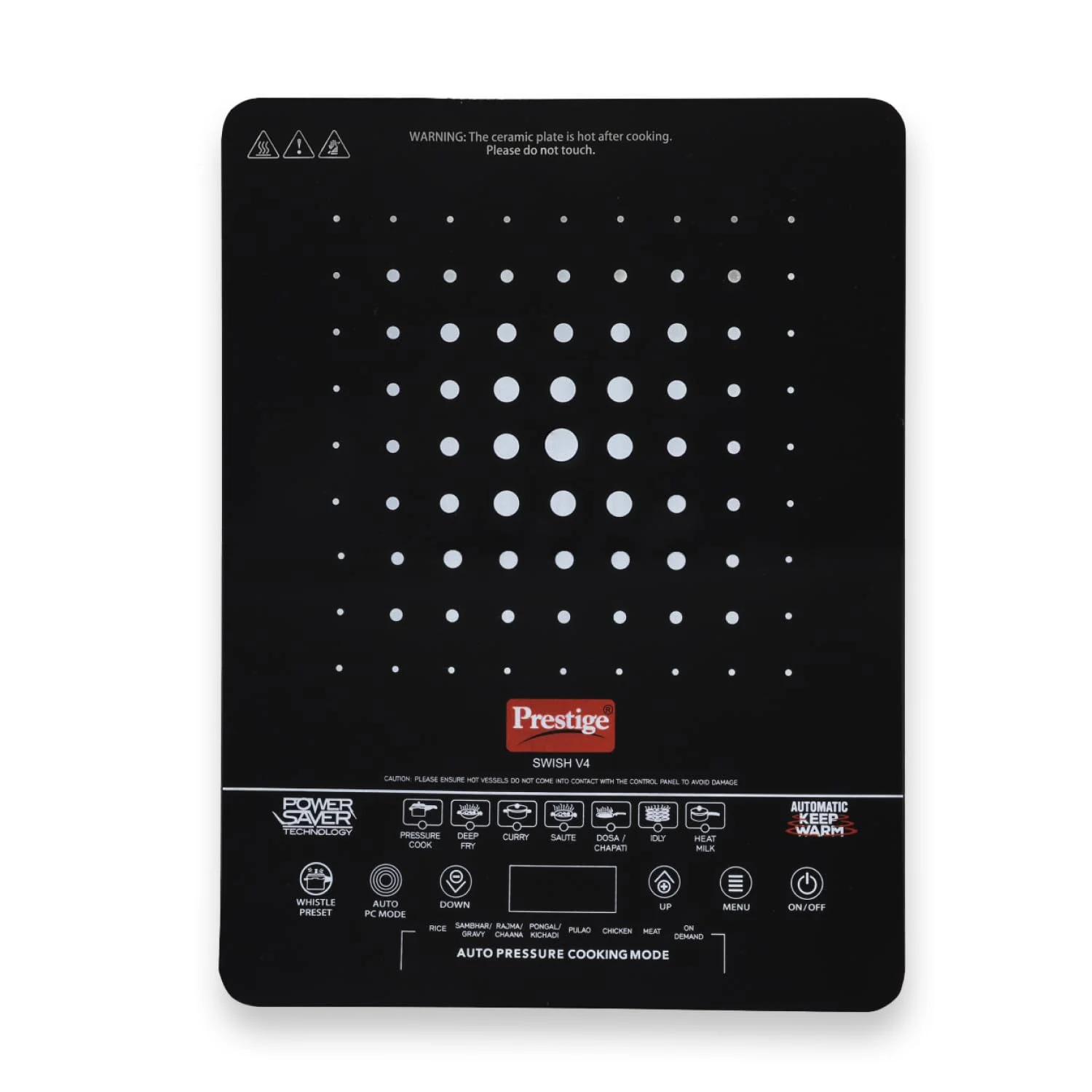
Many induction cooktops in India come with preset cooking menus such as:
- Tea
- Milk
- Boil
- Rice
- Dal
- Curry
- Roti
- Dosa
- Fry
- Pressure cook
- Keep warm
These presets are useful for beginners. For example, if you want to boil milk, you can select milk mode. If you want to cook rice, you can select rice mode. However, presets are not always perfect because cooking quantity, vessel type, and food type vary.
- Are Preset Menus Necessary?
Preset menus are useful, but not more important than wattage, safety, cookware compatibility, and build quality.
A good induction cooktop should also allow manual temperature and power control. Manual control gives better flexibility for Indian cooking.
FryerLab Recommendation
Choose an induction cooktop with both preset menus and manual power control. Presets are helpful, but manual adjustment is necessary for proper cooking.
7. Temperature and Power Levels
A good induction cooktop should offer multiple temperature or power levels. This helps you cook different foods properly.
For example:
- Low heat for keeping food warm
- Medium heat for sabzi
- High heat for boiling water
- Controlled heat for dal and rice
- High heat for frying
- Medium-low heat for milk and tea
If the induction cooktop has very limited power levels, it may be hard to control cooking. For Indian cooking, fine control is important because milk can overflow, tadka can burn, and dosa needs stable heat.
What to Check
- Number of power levels
- Minimum power setting
- Maximum power setting
- Temperature range
- Manual adjustment buttons
- Timer control
This Induction Cooktop Buying Guide suggests buying a model with flexible heat control instead of only preset buttons.
8. Timer Function Is Very Useful
The timer function is one of the most useful features in an induction cooktop. It allows you to set cooking time, and the cooktop can stop after that time.
Useful for:
- Boiling eggs
- Cooking rice
- Making dal
- Heating milk
- Slow cooking
- Pressure cooker timing
- Reheating food
For busy users, timer control adds convenience and reduces the chance of overcooking. However, you should still stay near the kitchen, especially when boiling milk or cooking items that can overflow.
9. Safety Features You Must Check
Safety is very important because induction cooktops use electricity and high heat. A good model should include important safety features.
Important Safety Features
- Auto Shut-Off
This feature turns off the cooktop automatically when no vessel is detected or when cooking time is over.
- Overheat Protection
If the appliance becomes too hot, it should automatically reduce power or shut down.
- Voltage Protection
Voltage fluctuation is common in many Indian areas. Voltage protection helps protect the appliance from damage.
- Child Lock
Child lock is useful if you have kids at home. It prevents accidental changes in settings.
- Pan Detection
The induction cooktop should detect whether a compatible vessel is placed on the surface.
- Cool-Touch Body
The glass surface may become warm because of the hot vessel, but the body should be designed safely.
- Error Code Display
Error codes help you understand problems such as incompatible cookware, overheating, or voltage issues.
- FryerLab Safety Tip
Never place paper, plastic, cloth, or aluminium foil between the cooktop and vessel. Always keep the cooktop on a flat, dry, heat-safe surface.
10. Check Glass Top Quality
The top surface of an induction cooktop is usually made from ceramic or toughened glass material. This surface must handle heat, vessel weight, and daily cleaning.
What to Look For
- Smooth surface
- Scratch-resistant design
- Strong glass plate
- Easy cleaning
- Proper vessel support
- Heat-resistant quality
Avoid dragging heavy vessels on the surface because it can create scratches. Also avoid dropping heavy cookware on the glass plate.
Cleaning Tip
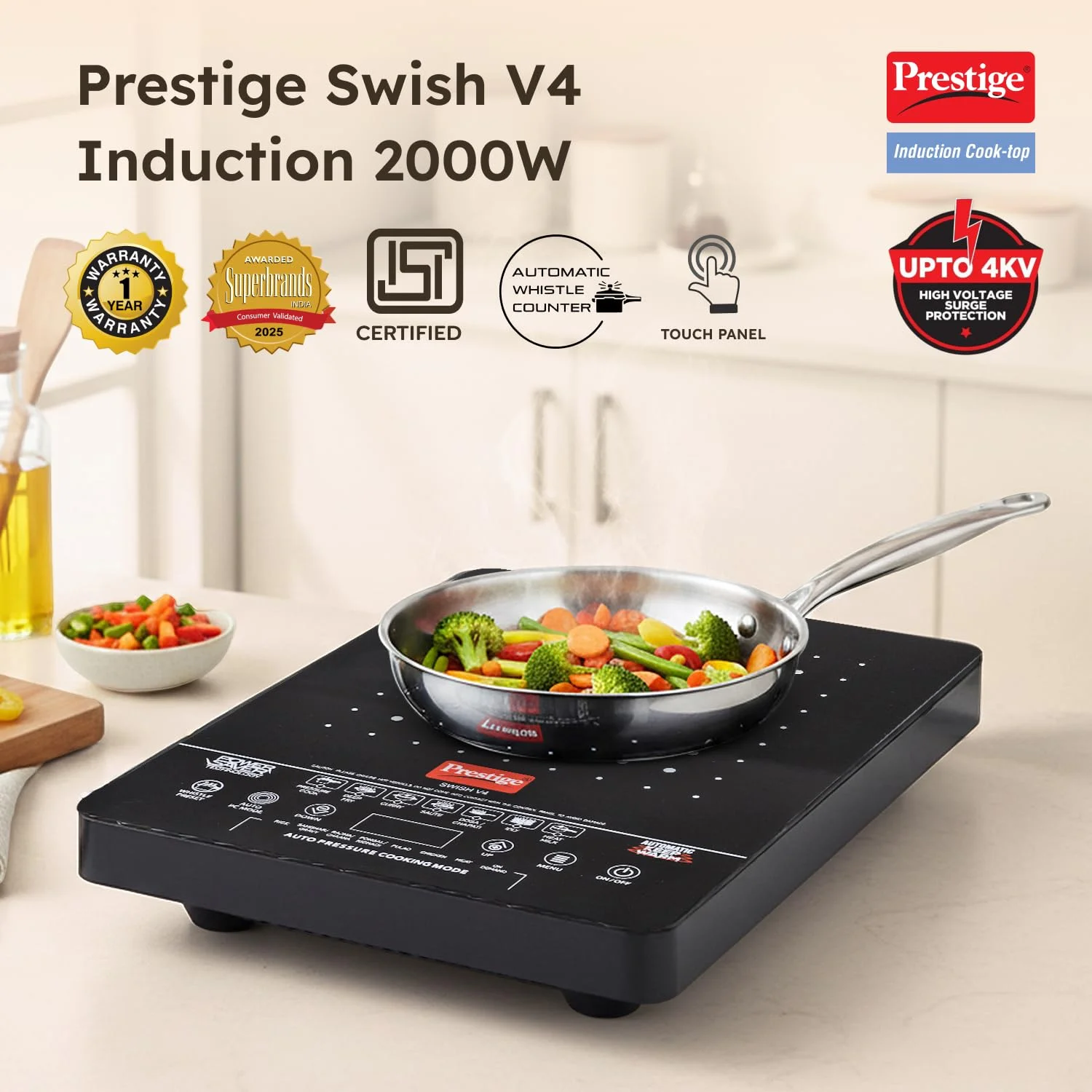
After cooking, let the cooktop cool down. Then wipe it with a soft damp cloth. Avoid harsh scrubbers, metal scrub pads, sharp objects, and abrasive cleaners. Prestige also recommends allowing the cooktop to cool and using a soft cloth or sponge with mild detergent instead of abrasive cleaners.
11. Ventilation and Cooling Fan
Induction cooktops have internal electronic parts. These parts need cooling. That is why most induction cooktops have a cooling fan and ventilation slots.
What to Check
- Air vents should not be blocked
- Fan noise should not be too loud
- Cooktop should not overheat quickly
- Bottom clearance should be proper
- Do not use it on bed, cloth, or uneven surface
Always place the induction cooktop on a hard, flat, and ventilated surface. Do not block the air inlet or outlet.
12. Best Induction Cooktop for Indian Cooking
Indian cooking needs are different from Western cooking. We use pressure cookers, kadai, tawa, milk pans, tea pans, and deep vessels. So, your induction cooktop should support these needs.
For Tea and Milk
Even a basic induction cooktop can make tea and milk. But you need good low and medium heat control because milk can overflow quickly.
For Dal and Rice
Choose at least 1800W for comfortable dal and rice cooking. A timer is useful here.
For Pressure Cooker
Most induction-compatible pressure cookers work well. Make sure the cooker has a flat induction base.
For Dosa and Chapati
You need an induction-compatible flat tawa. Cast iron or induction-friendly tawa works well, but heat control matters.
For Deep Frying
Deep frying needs higher heat and stable temperature. A 2000W or higher model is better.
For Sabzi and Curry
A good induction kadai with flat base is important. Manual heat control helps avoid burning masala.
FryerLab Recommendation
For proper Indian cooking, choose:
1800W to 2000W minimum
Flat glass top
Manual power control
Timer
Auto shut-off
Good brand warranty
Induction-compatible cookware
This Induction Cooktop Buying Guide recommends avoiding very low-watt models if you plan to cook full Indian meals daily.
13. Induction Cooker Price Range in India
Prices change frequently, but induction cooktops in India are generally available in different budget ranges.
Under ₹1500
Good for basic use, but may have limited power, simple controls, and average build quality.
Best for:
Tea
Milk
Boiling
Light use
Emergency backup
₹1500 to ₹2500
This is a popular budget range. You can get decent 1600W to 2000W models with basic presets and safety features.
Best for:
Students
Small families
Light to medium cooking
Backup use
₹2500 to ₹4000
This is a better range for regular Indian cooking. You can get better wattage, better build, touch controls, timer, presets, and improved safety.
Best for:
Daily cooking
Family kitchen
Better durability
Faster cooking
Above ₹4000
Premium models may offer better design, stronger glass, improved controls, better brand quality, and more advanced features.
Best for:
Heavy users
Premium kitchen
Long-term use
Better finish and design
FryerLab Buying Advice
Do not buy only because a model is cheap. Choose the model that matches your cooking needs. A slightly higher price can be worth it if you get better wattage, safety, and durability.
14. Brand and Service Support
Brand support is important for any kitchen appliance. Induction cooktops have electronic circuits, fans, buttons, and glass tops. If something fails, service support matters.
Popular induction cooktop brands in India include:
- Prestige click here to cheak out on Amazon
- Philips click here to cheak out on Amazon
- Bajaj click here to cheak out on Amazon
- Havells click here to cheak out on Amazon
- Pigeon click here to cheak out on Amazon
- Usha click here to cheak out on Amazon
- Crompton click here to cheak out on Amazon
Before buying, check:
- Warranty period
- Service center availability
- Customer reviews
- Spare part support
- Brand reputation
- Return policy
- After-sales service
A popular brand is not always perfect, but it usually gives better service support than unknown brands.
15. Cord Length and Plug Quality
This is a small but important point. Many people ignore the power cord. A short cord can make placement difficult. Also, a high-wattage appliance needs a good-quality plug and socket.
What to Check
- Cord length
- Plug quality
- Wire thickness
- Socket compatibility
- Proper earthing
- Avoid loose sockets
For 2000W or higher models, use a good-quality socket. Avoid using cheap extension boards. If you must use an extension, use a heavy-duty extension board that supports high wattage.
16. Common Mistakes to Avoid
This Induction Cooktop Buying Guide will be incomplete without discussing common buying mistakes.
Mistake 1: Buying Only by Price
Cheap models may look attractive, but they may have weak build quality, poor heating, or limited safety.
Mistake 2: Ignoring Cookware Compatibility
If your utensils do not work on induction, you will have to spend extra money on cookware.
Mistake 3: Choosing Low Wattage for Heavy Cooking
A low-watt induction cooktop may be slow for frying, pressure cooking, or family meals.
Mistake 4: Not Checking Warranty
Always check warranty and brand service support.
Mistake 5: Using Round-Bottom Kadai
Round-bottom vessels do not work well. Use flat-base cookware.
Mistake 6: Blocking Ventilation
Blocked air vents can cause overheating and damage.
Mistake 7: Using Wet Surface
Keep the cooktop and plug area dry.
Mistake 8: Dragging Heavy Vessels
Dragging vessels can scratch or damage the glass top.
Mistake 9: Cooking Everything at Maximum Power
Use proper heat levels. High heat is not required for every dish.
Mistake 10: Not Reading the Manual
Every induction cooktop has different error codes and safety instructions. Read the manual before use.
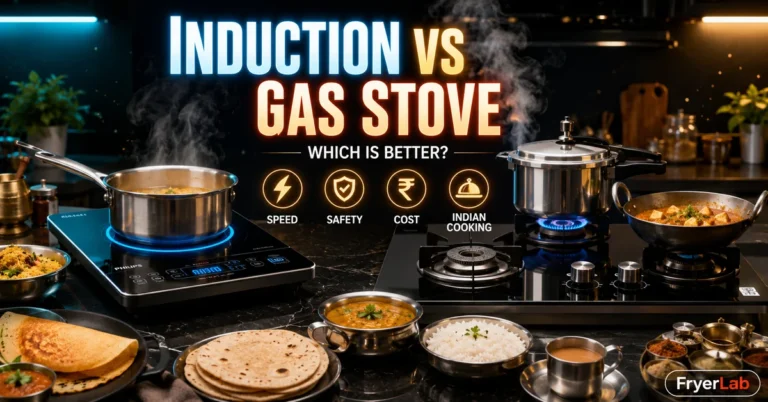
17. Induction Cooktop vs Gas Stove
Many buyers ask: is induction better than gas?
The answer depends on your cooking style.
Induction Cooktop Advantages
Faster heating
Cleaner cooking
No open flame
Easy to wipe
Compact size
Good for small homes
Useful as backup
Gas Stove Advantages
Works with almost all vessels
Better flame control for some cooking styles
No electricity dependency
Familiar to most Indian households
Good for large family cooking
Which Is Better?
For many Indian homes, the best setup is to have both. Use gas for traditional cooking and induction for fast boiling, tea, rice, dal, reheating, and backup cooking.
If you live alone or in a hostel, induction can be your main cooking appliance. If you have a big family, induction can be a strong secondary cooking option.
18. Induction Cooktop vs Electric Hot Plate
An electric hot plate uses a heating coil or plate. It takes more time to heat and cool. Induction cooktops heat compatible vessels directly using magnetic fields, so they are usually faster and more efficient.
Induction Cooktop
- Faster heating
- Better energy transfer
- Safer than open coil
- Needs compatible cookware
- More modern
Electric Hot Plate
- Works with more vessel types
- Slower heating
- Surface stays hot longer
- Less efficient
- Basic technology
For most users, induction is a better choice than a regular electric hot plate.
19. What to Look for Induction Cooktop Buying Guide
Here is the most important section for buyers searching for what to look for induction cooktop buying guide.
Before buying, check these points carefully:
1. Wattage
Choose 1800W to 2000W for regular Indian cooking. Choose 2000W+ for faster performance.
2. Cookware Compatibility
Check whether your pressure cooker, tawa, kadai, saucepan, and milk pan are induction-compatible.
3. Safety Features
Auto shut-off, overheating protection, voltage protection, and pan detection are important.
4. Control Type
Push button is practical. Touch control is modern and easy to clean.
5. Timer
Useful for rice, dal, boiling, and slow cooking.
6. Preset Menus
Indian cooking presets are useful but not mandatory.
7. Build Quality
Check glass top, body material, button quality, and ventilation.
8. Brand Warranty
Choose a brand with good service support.
9. Price
Do not buy only the cheapest model. Buy according to your cooking needs.
10. User Reviews
Check reviews for heating speed, fan noise, durability, and service experience.
This Induction Cooktop Buying Guide recommends balancing price, power, safety, and cookware compatibility.
21. Best Cookware for Induction Cooking
Your induction cooktop performance depends heavily on cookware. Even the best induction cooktop will perform badly with poor cookware.
Best Cookware Types
- Induction Pressure Cooker
Good for dal, rice, chana, rajma, khichdi, and daily Indian cooking.
- Induction Tawa
Useful for chapati, dosa, paratha, and roasting.
- Induction Kadai
Useful for sabzi, curry, frying, and tadka.
- Stainless Steel Saucepan
Good for tea, milk, boiling, soup, and reheating.
- Cast Iron Cookware
Good heat retention, but it can be heavy. Handle carefully to avoid scratching the glass top.
Cookware Buying Tips
Choose flat base
Check induction symbol
Use magnet test
Avoid very thin cookware
Avoid warped bottom
Match cookware size with cooktop area
Do not use empty cookware on high heat for long
22. Maintenance Tips for Long Life
A good induction cooktop can last longer if used properly.
Daily Care
- Wipe after every use
- Keep surface dry
- Do not spill water near buttons
- Clean after cooling
- Use soft cloth
- Avoid harsh chemicals
Weekly Care
- Clean air vents carefully
- Check plug and wire
- Remove food stains
- Check fan sound
- Check glass surface
Usage Care
- Do not overload with very heavy vessels
- Do not drop utensils on glass
- Do not block ventilation
- Do not use unstable cookware
- Do not use damaged power cord
Proper care can improve performance and reduce repair problems.
23. Who Should Buy an Induction Cooktop?
An induction cooktop is a good choice for:
- Students
- Bachelors
- Working professionals
- Small families
- Rented homes
- Hostel rooms
- PG accommodation
- Backup cooking
- Modular kitchens
- People who want clean cooking
- People who want fast boiling and reheating
It may not be the best single cooking solution for very large families that cook multiple dishes at the same time, unless you buy a multi-zone induction hob or use it along with gas.
24. Who Should Avoid an Induction Cooktop?
You may avoid or delay buying an induction cooktop if:
- You do not have compatible cookware
- Your kitchen wiring is weak
- You face frequent power cuts
- You cook in very large quantities daily
- You prefer traditional flame cooking
- You use many round-bottom vessels
- You do not want to buy new utensils
But even in these cases, induction can still be useful as a backup appliance.
25. Final Buying Recommendation
If you are buying an induction cooktop in India, do not get confused by too many models. Focus on the basics.
For most Indian homes, the best induction cooktop should have:
- 1800W to 2000W power
- Flat glass top
- Auto shut-off
- Overheat protection
- Pan detection
- Timer function
- Manual power control
- Indian cooking presets
- Good ventilation
- Strong body
- Minimum 1-year warranty
- Reliable brand support
If you want only basic use, a 1500W model can be enough. But if you want regular Indian cooking, choose a better 1800W to 2000W model. For faster cooking and frying, choose 2000W to 2200W.
The most important point in this Induction Cooktop Buying Guide is this: do not buy only by price. Buy according to your cooking style, cookware, safety needs, and long-term use.
Conclusion
An induction cooktop is one of the most practical kitchen appliances for modern Indian homes. It is fast, clean, compact, easy to use, and helpful as both a primary and backup cooking option. But to get the best experience, you must choose the right wattage, use compatible cookware, check safety features, and buy from a reliable brand.
This detailed Induction Cooktop Buying Guide covered everything you need to know before buying an induction cooktop in India. For most Indian families, a 1800W to 2000W induction cooktop with good safety features, timer, manual power control, and induction-compatible cookware support is the best choice.
Before buying, remember this simple formula:
Right wattage + flat magnetic cookware + safety features + good brand = best induction cooktop for Indian cooking.